
Special Needs Trust Florida: A 2026 Guide for West Palm Beach Families

What if the inheritance you worked a lifetime to build actually jeopardizes your child’s access to essential healthcare? You want to provide a permanent safety net, yet Florida’s strict 2,000 dollar asset limit for programs like SSI and Medicaid makes traditional gifting a risky move. It’s natural to feel overwhelmed by the complexity of state laws or worried about who will manage these funds when you're no longer there to oversee them.
This guide simplifies the process by showing you how a special needs trust florida strategy preserves government benefit eligibility while funding a much higher quality of life. You'll learn to master 2026 legal requirements with a modern, flexible approach that keeps your family's assets secure from government seizure. We explore the specific statutes affecting West Palm Beach families and the exact steps to build a resilient financial legacy that adapts as your loved one's needs evolve. By the end of this article, you'll have a clear, strategic path toward long term peace of mind.
Key Takeaways
Understand how a special needs trust florida allows you to provide for a loved one’s extra needs without disqualifying them from vital government support.
Discover the critical differences between first-party and third-party trusts and how to avoid the state "payback" requirement.
Navigate the 2026 financial thresholds for Medicaid and SSI with a strategic asset protection plan tailored for West Palm Beach families.
Learn the essential steps for selecting a trustee and drafting a "Letter of Intent" to ensure your future care instructions are followed.
Experience the benefit of a modern, flat-fee legal approach that prioritizes transparency and flexibility in your family’s planning process.
Table of Contents What is a Special Needs Trust in Florida? First-Party vs. Third-Party Special Needs Trusts Protecting Medicaid and SSI Eligibility in West Palm Beach Strategic Steps: Setting Up Your Florida Special Needs Trust Why a Modern West Palm Beach Law Firm Makes the Difference
What is a Special Needs Trust in Florida?
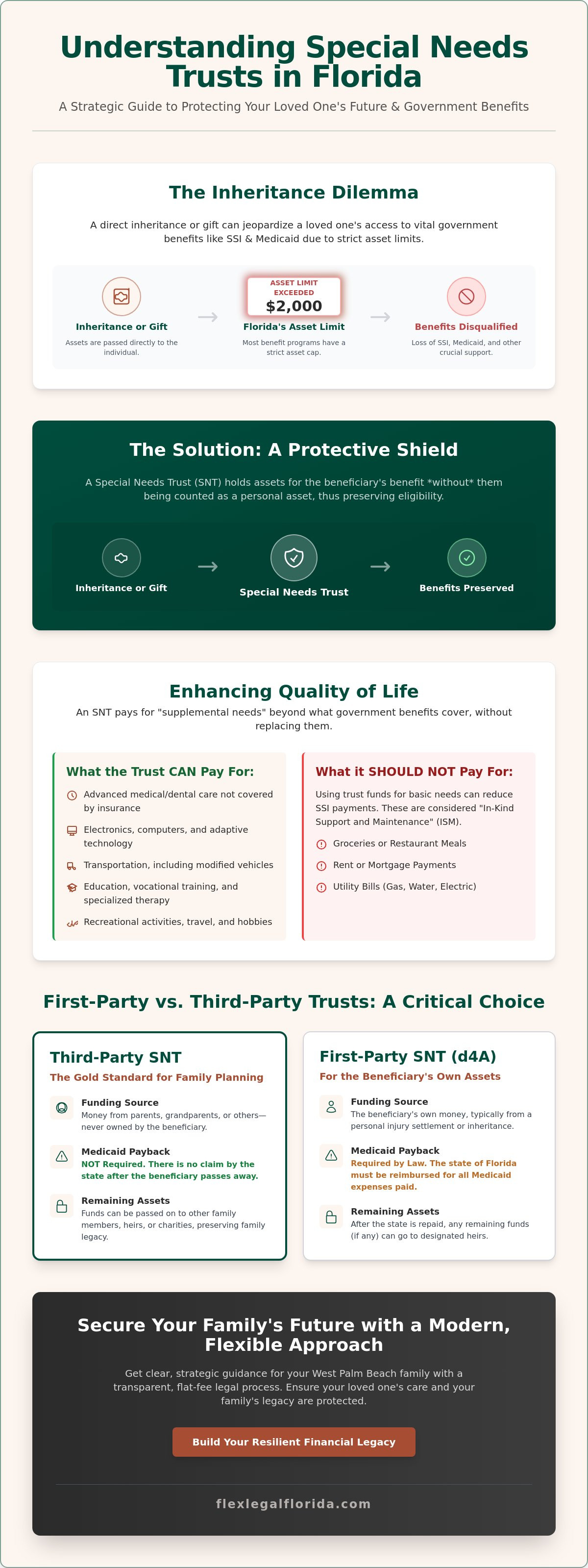
A special needs trust florida is a specialized legal tool designed to protect the financial future of individuals with disabilities. For families in West Palm Beach, these trusts serve as a strategic bridge. They allow a person to receive an inheritance, personal injury settlement, or gift while remaining eligible for vital government programs like Supplemental Security Income (SSI) and Medicaid. Without this structure, a sudden influx of cash would likely disqualify the beneficiary from benefits until the funds are spent down to less than $2,000, which is the current asset limit for most programs in 2025 and 2026.
The primary goal is enhancement, not just survival. While government benefits cover the bare essentials, they rarely provide for a high quality of life. What is a Special Needs Trust? It is essentially a legal "bucket" that holds assets for the benefit of a person with a disability without those assets being "counted" against them. It pays for the "extras" that Medicaid won't cover. For West Palm Beach families, tailoring these documents to Florida Statutes is vital because state-specific rules for Medicaid eligibility are strict and frequently updated by the Department of Children and Families.
The Legal Foundation of Florida SNTs
Florida SNTs are built on both federal and state authority, primarily 42 U.S.C. § 1396p. This law allows for the creation of a separate legal entity that owns the assets rather than the individual. This distinction is crucial. Assets held within a properly structured special needs trust florida are defined as non-countable resources for Florida Medicaid purposes, meaning they do not impact the beneficiary's eligibility status. This legal separation ensures that the trust acts as a shield, protecting the beneficiary's financial security from being drained by medical costs.
Supplemental Needs vs. Basic Support
Understanding the difference between supplemental and basic support is the key to maintaining SSI payments. The Social Security Administration monitors how trust funds are spent. If a trustee uses the funds for food or shelter, it can trigger a reduction in SSI benefits by up to one-third. Instead, the trust should focus on enhancing the beneficiary's life through specific purchases:
Advanced medical and dental care not covered by insurance.
Electronics, computers, and adaptive technology.
Transportation, including modified vehicles.
Education, vocational training, and specialized therapy.
Recreational travel and hobbies.
A standard revocable trust used in typical estate planning does not offer these protections. In a standard trust, the assets are usually considered "available" to the beneficiary. This makes them countable and causes an immediate loss of benefits. An SNT, however, uses specific language to ensure the funds are only used to supplement, not replace, public assistance.
First-Party vs. Third-Party Special Needs Trusts
Families in West Palm Beach often face a pivotal choice between two primary structures when setting up a special needs trust florida. The source of the money determines which rules apply. While both options protect eligibility for government benefits, they function differently during the beneficiary's life and after they pass away. Understanding these nuances is essential for 2026 planning, as state regulations regarding asset limits and reporting continue to evolve.
Third-Party SNTs: The Gold Standard for Families
For most parents in Palm Beach County, the Third-Party SNT is the preferred vehicle. It's funded by assets belonging to someone other than the beneficiary, such as a parent, grandparent, or sibling. Because the disabled individual never owned the money, Florida law doesn't require a Medicaid payback. This means that if funds remain after the beneficiary passes, those assets can go to other family members or charities. It's a strategic way to preserve a family legacy while providing for a loved one.
Strategic planning often involves integrating this tool into a larger revocable trust to ensure a seamless transition of wealth. Families frequently fund these trusts through life insurance policies or specific bequests in a will. This setup offers maximum flexibility, as it allows the grantor to change the terms or beneficiaries as family dynamics shift. It's an efficient way to provide for a child's future without jeopardizing their current support systems.
First-Party (d4A) Trusts: Managing Settlements and Windfalls
First-Party trusts, sometimes called d4A trusts, hold assets that already belong to the person with a disability. This typically happens after a personal injury settlement or an unexpected inheritance that wasn't properly planned. According to federal guidelines on First-Party and Third-Party Trusts, these must include a "payback" provision.
In Florida, the Agency for Health Care Administration (AHCA) tracks these accounts closely. When the beneficiary dies, the trust must use any remaining funds to reimburse the state for Medicaid expenses incurred during their lifetime. These trusts also come with a strict age 65 restriction. They must be established and funded before the individual reaches that age. Because they involve the beneficiary's own money, the reporting requirements are more rigorous. The trustee must provide detailed accountings to the state and Social Security to ensure every dollar spent aligns with strict regulations.
Choosing the right path requires a clear understanding of your family's financial landscape. If you're looking for a tailored approach to your special needs trust florida, our team can help you identify the most effective structure for your situation.
Protecting Medicaid and SSI Eligibility in West Palm Beach
For many families in West Palm Beach, the primary challenge isn't just providing for a loved one; it's doing so without triggering a loss of vital government benefits. In 2026, the financial thresholds for state and federal aid remain incredibly tight. A special needs trust florida serves as a strategic tool to bridge the gap between necessary state aid and the lifestyle enhancements your family member deserves. By placing assets into a trust, they are no longer counted as personal property, allowing the beneficiary to maintain their safety net while accessing additional resources for a higher quality of life.
The legal framework for these trusts is complex, and the stakes are high. It is helpful to review the Seventeenth Judicial Circuit of Florida's policy on Special Needs Trusts to understand how local courts oversee these arrangements. This oversight ensures that the trust remains in compliance with both state law and federal Social Security Administration (SSA) guidelines, protecting the beneficiary from accidental disqualification.
Medicaid Asset Limits in Florida
Florida’s Medicaid program generally enforces a $2,000 asset limit for individuals as of 2026. If a bank account or countable asset exceeds this amount by even a small margin, benefits can be suspended immediately. A properly drafted trust effectively "hides" these assets from the state’s perspective because the beneficiary does not have legal control over the funds. This is a critical component of how to qualify for medicaid while still preserving family wealth for long-term care. Our approach ensures that your assets are structured to provide support without violating these rigid financial ceilings.
SSI Income Restrictions
Supplemental Security Income (SSI) is equally sensitive to financial changes. Direct cash payments from a trust to a beneficiary are viewed as "unearned income," which can reduce the SSI check dollar-for-dollar or eliminate it entirely. To avoid this, we focus on strategic distribution methods:
Third-Party Payments: The trustee pays vendors directly for services like tuition, therapy, or entertainment.
ISM Management: We navigate "In-Kind Support and Maintenance" (ISM) rules, which can reduce benefits if the trust pays for food or shelter directly.
ABLE Accounts: In 2026, many families use ABLE accounts to complement a special needs trust florida, allowing for more flexible spending on daily expenses without the same level of SSA scrutiny.
Because these rules evolve, working with a special needs planning attorney is the most reliable way to ensure your plan remains agile. We provide tailored solutions that adapt to your family’s unique financial landscape while keeping your loved one’s eligibility secure.
Strategic Steps: Setting Up Your Florida Special Needs Trust
Building a special needs trust florida requires more than just signing a legal document; it demands a strategic alignment of people and assets. Your plan must account for the nuances of 2026 tax laws and local West Palm Beach resources to be truly effective. This process transforms your vision into a functional safety net that protects your loved one's quality of life without jeopardizing their essential government benefits.
Choosing the Right Trustee
Selecting the person or entity to manage the funds is a decision that balances heart and logic. A sibling or close relative often brings a deep emotional connection and a personal understanding of the beneficiary's unique challenges. This intimacy is valuable, yet the administrative burden of a special needs trust florida can be overwhelming for a family member. Professional trustees in West Palm Beach, including local trust companies and specialized bank departments, offer a neutral, expert alternative. They provide the rigorous accounting and compliance knowledge necessary to satisfy Social Security Administration requirements. For the best of both worlds, consider appointing a Trust Protector. This individual acts as a safeguard, holding the authority to remove a trustee or modify the trust's terms if your family’s needs or Florida’s legal landscape shifts.
The Letter of Intent: Your Loved One’s Blueprint
The trust document provides the legal framework, but the Letter of Intent provides the soul. It isn't a legal mandate; it's a vital guide for future caregivers and trustees who may not know your child as well as you do. You should include specific details that a balance sheet can't capture:
Current medical history and contact information for specialists.
Daily routines, including sleep schedules and favorite activities.
Dietary restrictions, food allergies, and preferred brands.
Long-term aspirations for housing and social engagement.
Parents should update this letter annually to ensure the information remains accurate and relevant as the beneficiary grows. It’s the most effective way to communicate your expectations and your child’s personality to those who will step into your shoes.
Coordination is the final piece of the puzzle. Your SNT must integrate seamlessly with your Will and Power of Attorney to avoid conflicting instructions. Logistics matter, too. Funding the trust involves working with Palm Beach County financial institutions to open specialized accounts and retitle assets. This ensures every dollar is positioned correctly to support your loved one’s future. If you’re ready to build a resilient future for your family, our team can help you design a tailored special needs plan today.
Why a Modern West Palm Beach Law Firm Makes the Difference
Traditional legal models often struggle to keep pace with the dynamic needs of Florida families. At Flex Legal, we’ve replaced the rigid, intimidating atmosphere of old-school firms with an agile and empathetic approach. We understand that establishing a special needs trust florida isn't just a transaction; it's a commitment to your child's lifelong well-being. Our firm prioritizes clarity over complexity, ensuring you feel like a partner in the process rather than a spectator.
One of the most significant hurdles for families is the uncertainty of legal costs. We eliminate this friction by offering flat-fee pricing for complex trust drafting. You won't face the stress of a ticking clock or unexpected invoices for every phone call. This transparency allows us to focus entirely on the quality of the plan. It's a modern way to practice law that puts your family's financial stability first. Our core value is flexibility. We design plans that adapt as your circumstances change, ensuring your legal strategy remains relevant well beyond 2026.
The Flex Legal Approach: Transparent and Tailored
We've streamlined our communication to fit your busy schedule. West Palm Beach families often juggle therapy sessions, school meetings, and medical appointments. You don't have time for unnecessary office visits or dense legalese. We use modern tools to keep the process seamless and efficient. Many traditional firms provide a 100-page "one-size-fits-all" trust document. These generic templates are often the wrong choice for a special needs trust florida because they include irrelevant clauses that can confuse future trustees.
Jennifer Flexer is personally committed to serving West Palm Beach families with precision. She understands that a trust must be as unique as the individual it protects. By working with a dedicated attorney for special needs trust matters, you ensure your plan accounts for specific Florida regulations and your family's personal goals. We strip away the fluff and focus on what actually works for your loved one's future.
Next Steps: Securing Peace of Mind
The best time to start your planning is before a crisis occurs. A proactive, flexible estate plan provides long-term value that grows with your family. We invite you to schedule a strategy session to evaluate your specific situation. During this session, we'll identify potential gaps in your current arrangements and outline a clear path forward. This isn't about checking a box; it's about building a foundation that lasts for decades. Book a consultation with Flex Legal today to take the first step toward a secure and predictable future for your child.
Take the Next Step for Your Loved One’s Security
Protecting a family member with disabilities requires a strategy that balances immediate care with long-term financial stability. A correctly structured special needs trust florida ensures your loved one maintains access to vital programs like Medicaid and SSI while benefiting from additional resources. You now understand how the distinction between first-party and third-party trusts dictates who can fund the account and how remaining assets are handled. At Flex Legal, we provide the modern, compassionate guidance West Palm Beach families deserve. We’ve eliminated the stress of unpredictable legal costs by offering transparent flat-fee estate planning packages. Our local expertise allows us to build flexible solutions that reflect the specific needs of Florida residents in 2026 and beyond. We’re here to act as your agile ally, turning complex legal requirements into a clear path forward for your family's peace of mind.
Your family’s stability is within reach, and we’re ready to help you build it.
Frequently Asked Questions
Can I be the trustee of my child’s special needs trust in Florida?
Yes, you can serve as the trustee of your child's special needs trust in Florida. According to the Social Security Administration's 2024 POMS guidelines, parents are eligible to manage these accounts directly. However, managing these funds requires precision to avoid disqualifying your child from SSI or Medicaid benefits. We often recommend a co-trustee arrangement to balance your personal insight with professional compliance. This strategic approach ensures your child's 100% eligibility remains intact.
How much money can you put in a special needs trust in Florida?
There's no legal limit on the amount of money you can place into a special needs trust florida. Whether the trust holds $10,000 or $10 million, the assets don't count toward the $2,000 individual resource limit set by the SSA for 2024. This flexibility allows families to provide for a lifetime of care without losing government support. You can fund the trust through life insurance policies or personal savings to ensure long term stability.
What happens to the money in a special needs trust when the beneficiary dies?
The outcome depends on whether you've established a first-party or third-party trust. In a first-party trust, Florida's Agency for Health Care Administration must be reimbursed for Medicaid expenses paid during the beneficiary's life. If it's a third-party trust funded by family members, no Medicaid payback is required. You can designate specific family members or West Palm Beach charities to receive 100% of the remaining funds after the beneficiary passes away.
Is a special needs trust the same as an ABLE account?
No, these are distinct financial tools with different rules. An ABLE account, established under the 2014 ABLE Act, has an annual contribution limit of $18,000 for 2024 and a $100,000 cap before SSI benefits are suspended. A special needs trust florida offers more flexibility because it has no contribution ceiling. While ABLE accounts allow for tax-free growth, trusts provide more robust protection for larger assets like real estate or significant inheritances.
Can a special needs trust pay for a car or a house in West Palm Beach?
Yes, a trust can purchase a vehicle or a home for the beneficiary's use. The trust should own the title of the car to ensure the asset doesn't count against the beneficiary's resource limit. For housing in West Palm Beach, the trust can pay for a residence, though this might cause a reduction in SSI payments by 33% under the In-Kind Support and Maintenance rules. These strategic purchases provide a high quality of life.
Do I need a lawyer to set up a special needs trust in Florida?
While Florida law doesn't strictly require a lawyer, the complexity of state and federal regulations makes professional guidance essential. A single drafting error can lead to a benefit denial from the 511 Social Security offices operating across the country. Our team provides the strategic expertise needed to navigate these hurdles seamlessly. We focus on creating a tailored plan that protects your family's future and adapts to the evolving legal landscape in 2026.



Comments