
Revocable Trust Guide: Protecting Your West Palm Beach Estate in 2026

Updated: Apr 14
What if your private family legacy became a public record for anyone in West Palm Beach to view with a few clicks? Most Palm Beach County residents believe a standard Will protects their privacy, but the reality of the local court system is often far less discreet. In Florida, the probate process can routinely stall asset distribution for 6 to 12 months, leaving your loved ones waiting while legal fees accumulate. A revocable trust provides a modern, efficient alternative that keeps your family's business behind closed doors where it belongs.
We understand that you want a plan that's as dynamic as your life. You've likely felt the frustration of navigating complex state rules like Florida Homestead protection or worried about who manages your affairs if you're suddenly unable to do so. This guide clarifies those complexities by showing you how to bypass the 2026 probate backlog entirely. You'll discover how a tailored living trust ensures a seamless transition of your assets, maintains your total privacy, and provides the strategic flexibility your estate needs to thrive in the coming year.
Key Takeaways
Learn how to bypass the lengthy and public Florida probate process to keep your family’s financial affairs private and secure.
Discover how a revocable trust provides the ultimate flexibility, allowing you to manage and amend your estate plan as your life and assets evolve.
Identify the strategic differences between revocable and irrevocable options to ensure you maintain the right balance of control and asset protection.
Follow a streamlined, step-by-step roadmap to formalizing your estate plan using a modern, transparent, and flat-fee approach.
Table of Contents What is a Revocable Trust? The Foundation of Florida Estate Planning The Florida Probate Trap: Why West Palm Beach Families Choose Trusts Revocable vs. Irrevocable Trusts: Choosing Your Strategy How to Set Up and Fund Your Revocable Trust in Florida Modern Estate Planning: The Flex Legal Approach in West Palm Beach
What is a Revocable Trust? The Foundation of Florida Estate Planning
Imagine a legal "bucket" designed to hold your assets while giving you the keys to add or remove items at your discretion. That's the essence of a revocable trust. This strategic tool serves as the cornerstone of modern Florida estate planning because it offers a level of adaptability that a traditional Will simply cannot match. You maintain the power to change, amend, or completely revoke the document as long as you have the mental capacity to do so.
Understanding the foundation of trust law helps clarify why this structure is so effective for families in the Sunshine State. Under Florida Statutes Chapter 736, these entities are recognized as flexible vehicles that prioritize the grantor's intent. Unlike a rigid contract, your trust evolves alongside your life, accommodating new property acquisitions, changes in family dynamics, or shifts in financial goals.
Every trust relies on three essential roles that work in harmony:
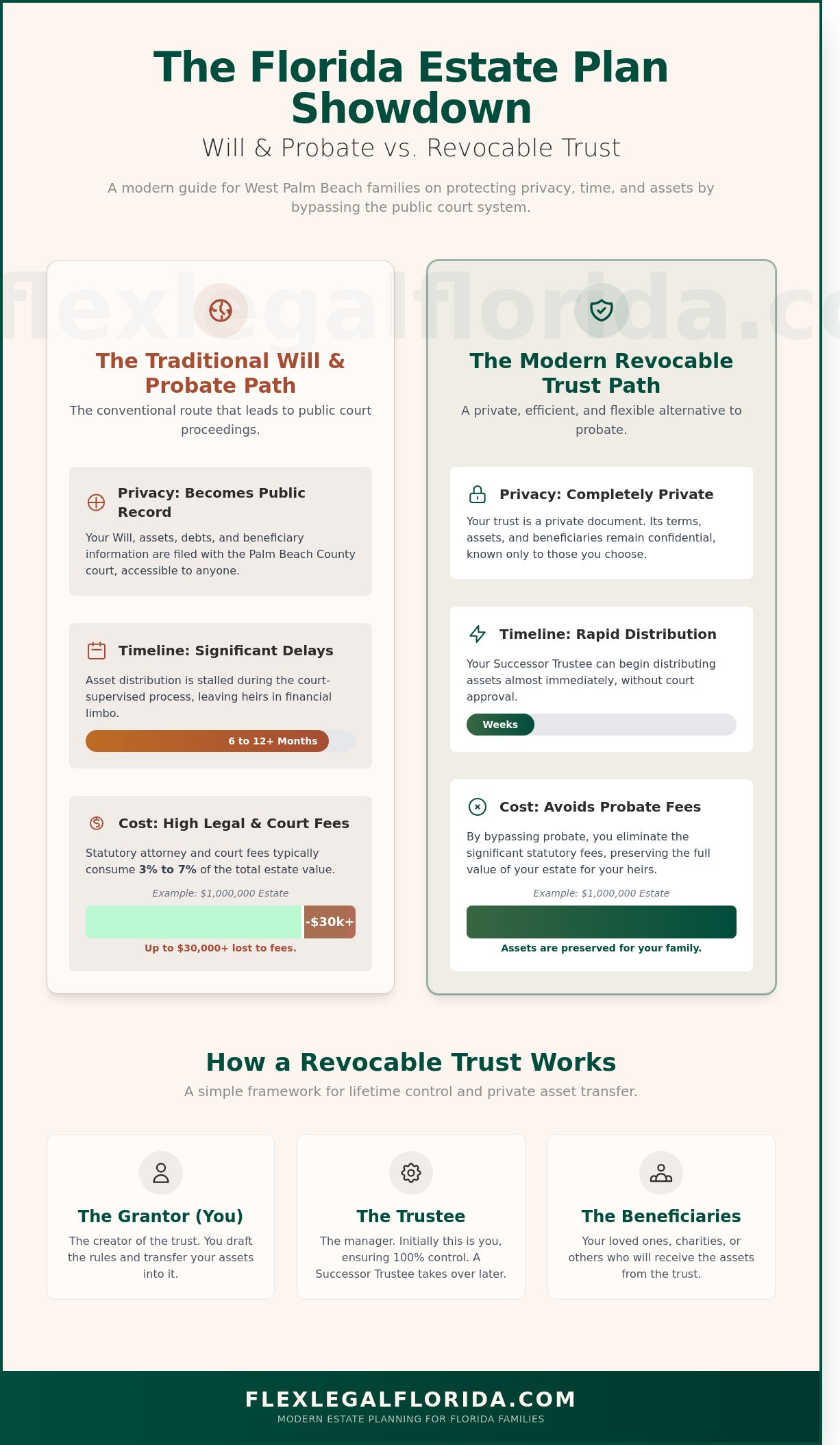
The Grantor: This is you. You're the creator of the trust and the person who transfers assets into it.
The Trustee: Usually, you'll name yourself as the initial trustee. This ensures you keep total control over your property.
The Beneficiaries: These are your loved ones, charities, or entities who'll eventually receive the assets.
Florida estate planners often prioritize trusts over simple Wills due to efficiency and confidentiality. In South Florida, probate proceedings can take 6 to 12 months to finalize and typically cost 3% to 7% of the estate's value in legal and court fees. A revocable trust bypasses this process entirely. Because the trust doesn't die when you do, your assets can be distributed to heirs in weeks rather than years. Additionally, while a Will becomes a public record in a Palm Beach County court, your trust remains a private document.
How the Trust Operates During Your Lifetime
Moving assets into a trust doesn't change your daily financial life. You retain 100% control over every house, bank account, or investment portfolio held within the structure. For tax purposes, the IRS views the trust as an extension of yourself, so you'll continue using your social security number for all filings. The real benefit appears if you face a health crisis. If a doctor determines you're unable to manage your affairs, the trust provides a seamless transition of management to your backup without a judge's intervention.
The Successor Trustee: Your Agile Ally
Choosing a Successor Trustee is a pivotal decision for your future security. This individual or entity only steps into the spotlight when you're no longer able to serve due to illness or death. In West Palm Beach, many residents choose a trusted family member, while others opt for a professional fiduciary to ensure neutral, expert administration of complex assets. You need someone who is organized and capable of following the roadmap you've laid out.
A Successor Trustee is the individual responsible for asset distribution without court intervention.
The Florida Probate Trap: Why West Palm Beach Families Choose Trusts
West Palm Beach families often discover that a simple Will isn't the shield they imagined. Florida probate is a public, court-supervised process that typically stretches from 6 to 12 months, even for uncomplicated estates. During this period, your assets remain locked under court oversight, leaving your loved ones in a state of financial limbo. Privacy vanishes the moment a Will enters the courthouse. Because probate is a matter of public record, anyone can access the filings to see exactly what you owned, what you owed, and who your heirs are.
The financial impact is equally significant. Florida Statutes section 733.6171 suggests that a fee of 3% on the estate's value is a reasonable starting point for attorney compensation. For a $1 million Palm Beach home, this represents $30,000 in administrative costs that could have been preserved for your family. A revocable trust functions as a private probate. It allows your successor trustee to settle your affairs in a law office rather than a courtroom, ensuring a seamless transition of wealth without public interference.
The Florida Trust Code provides the legal framework that makes this streamlined process possible. By following these statutory guidelines, you can ensure your assets move directly to your beneficiaries without the delays inherent in the state's judicial system.
Avoiding the Palm Beach County Circuit Court
The 15th Judicial Circuit of Florida manages a heavy caseload. This often leads to scheduling delays for mandatory hearings. Without a trust, your family must petition the court for "Letters of Administration" before they can manage bank accounts or sell real estate. This court-supervised administration requires constant filings, formal notices to creditors, and specific judicial approvals. Choosing a revocable trust removes these hurdles, saving your family from the stress of mandatory court appearances and the high costs of filing fees.
The Florida Homestead Trap and Your Trust
Your primary West Palm Beach residence requires a strategic approach. Florida Homestead laws offer powerful protections against creditors and property tax increases, but they are notoriously complex. If a trust is drafted incorrectly, you might accidentally trigger a loss of the "Save Our Homes" tax cap or lose the residence's protected status. A tailored strategy ensures your home remains a protected asset while allowing it to pass to your heirs without the need for a judicial order. If you want to avoid these common pitfalls, considering modern estate planning solutions can help you maintain control over your legacy.
Revocable vs. Irrevocable Trusts: Choosing Your Strategy
Choosing the right strategy depends on your specific goals for control and protection. A revocable trust acts as a flexible tool for managing assets during your life. You keep total control. You can change the terms, add or remove property, or even dissolve the trust entirely as your circumstances evolve. Most Florida families choose this path because it offers a seamless way to avoid probate while keeping them in the driver's seat of their financial lives.
We need to clear up the most common misconception regarding these documents. Your revocable trust doesn't shield assets from your own creditors. Because you maintain the power to pull money out at any time, Florida law views those assets as yours. If a court enters a judgment against you, those trust assets are typically reachable. Real asset protection requires a different, more rigid approach.
For high-net-worth estates in South Florida, tax strategy becomes a primary focus. The 2024 federal estate tax exemption is $13.61 million per individual. If your estate exceeds this threshold, we look beyond basic probate avoidance. We design strategic structures that leverage this exemption, ensuring more wealth stays with your beneficiaries rather than going to the IRS.
When to Consider an Irrevocable Option
Sometimes, you need to trade control for permanent security. Irrevocable trusts are generally set in stone. Once you transfer an asset, you can't simply take it back. This trade-off is essential for Medicaid planning, especially when navigating the five-year look-back rule for long-term care eligibility. It's also a vital tool for professionals in high-risk fields, such as surgeons or developers, who need to insulate assets from potential professional liability claims.
The "Pour-Over" Will: Your Safety Net
Even the most organized person might leave an asset outside their trust. You might purchase a new vehicle or open a savings account and forget to update the title. A Pour-Over Will acts as a vital catch-all. It ensures any stray assets move into your trust after you pass away, preventing a partial probate process. This document is also where you legally name guardians for children under age 18. Without this specific designation, a Florida judge will decide who raises your children, a risk most parents aren't willing to take.
How to Set Up and Fund Your Revocable Trust in Florida
Establishing a revocable trust is a strategic move that requires more than just signing a document. It's a multi-step process designed to safeguard your legacy and provide your family with a seamless transition of wealth. The journey begins with a consultation. You'll work with a West Palm Beach estate planning attorney to design a plan tailored to your specific goals. This stage focuses on efficiency and clarity, ensuring every family nuance is addressed before the paperwork is drafted.
Once the design is final, you'll move to the execution phase. Florida Statute 736.0403 dictates strict signing requirements. You must sign the Trust Agreement in the presence of two witnesses and a notary public. This formal process mirrors the requirements for a last will and testament, providing the legal weight necessary to withstand future challenges. Without these specific formalities, the document may not be recognized by Florida courts.
The Critical Step: Funding Your Trust
An empty trust is a common mistake that leads to unnecessary probate. Your trust only controls the assets it officially owns. Funding is the process of retitling your property from your individual name to the name of the trust. It's a vital task that turns a legal document into a functional shield for your estate.
Real Estate: For property in West Palm Beach, we often use Quitclaim Deeds or Lady Bird Deeds. A Lady Bird Deed is a strategic tool that transfers property to the trust upon death while allowing you to maintain homestead tax exemptions during your lifetime.
Financial Accounts: You must contact your bank to retitle checking and savings accounts. Most institutions require a Certificate of Trust to complete this change.
Non-Retirement Investments: Brokerage accounts should be moved into the trust's name to ensure they bypass the court system.
Don't forget about beneficiary designations. While you don't "retitle" life insurance or 401(k) plans, you must update the beneficiary forms. Aligning these accounts with your overall plan ensures your strategy remains cohesive and effective.
For seniors looking to ensure their final expenses are covered alongside their trust, The Paul Group provides specialized life insurance solutions designed to work with your estate plan.
Maintaining Your Trust Over Time
Your life is dynamic, and your legal strategy should be just as agile. A plan created in 2020 might not reflect your current reality in 2024. Florida laws evolve, and your family structure changes. You should review your trust every 3 to 5 years to ensure it reflects your current family dynamics and financial situation.
Specific life events should trigger an immediate review. These include a new marriage, the birth of a child, a divorce, or the death of a named successor trustee. If you move into Florida from another state, a review is mandatory to ensure your documents comply with local statutes. Keeping your plan updated prevents friction and ensures your instructions remain clear for your loved ones.
Ready to build a modern, flexible estate plan?
to start your custom revocable trust today.
Modern Estate Planning: The Flex Legal Approach in West Palm Beach
Traditional law firms often feel like relics of a bygone era. They operate from behind heavy mahogany desks and bill by the minute, creating a barrier between the attorney and the client. Flex Legal, PLLC breaks this mold. We view ourselves as your agile ally in West Palm Beach. Our goal is to make the process of creating a revocable trust feel like a strategic partnership rather than a cold transaction. We focus on modern solutions that adapt to your life, ensuring your estate plan remains as dynamic as your family's needs.
Our team brings specialized focus to areas that matter most to Florida residents. This includes Special Needs Planning and robust Asset Protection. We don't use one-size-fits-all templates. Instead, we tailor every plan to your specific financial and personal situation. Our promise is a streamlined experience that respects your time. We use modern communication tools to keep the process moving without friction, providing a fresh and energetic alternative to the slow, traditional legal models found elsewhere in the county.
Why Price Certainty Matters
Traditional hourly billing often leads to "fee anxiety." You shouldn't have to watch the clock while discussing your family's future. Our flat-fee model removes the guesswork. You'll know exactly what your investment is before we start. This transparency allows for open communication without the fear of a surprise invoice. A comprehensive estate planning package at Flex Legal, PLLC includes the design, drafting, and execution of your core documents. You can learn more about the Cost of a Living Trust in West Palm Beach to see how our transparent approach benefits your bottom line. We prioritize clarity because trust is built on honesty, not hidden costs.
Your Next Steps with Flex Legal, PLLC
Securing your family's future shouldn't be a burden. Our office is conveniently located on Palm Beach Lakes Blvd., right in the heart of West Palm Beach. Scheduling a consultation is the first step toward genuine peace of mind. We've simplified the intake process to ensure your time is used effectively from the very first minute. To make our initial meeting as productive as possible, please bring the following items:
A basic list of your primary assets and their approximate values.
Full legal names and contact information for your proposed Take Control of Your West Palm Beach LegacyProtecting your family's future requires a strategy that evolves alongside changing laws. By implementing a revocable trust, you're choosing to bypass the public and often lengthy Florida probate process. This choice is vital as we approach January 1, 2026, when current federal estate tax exemptions are scheduled to sunset under the Tax Cuts and Jobs Act. It's not just about tax efficiency; it's about ensuring your assets remain accessible to your loved ones without the 6 to 12 month delays common in local courts. Flex Legal offers a modern alternative to rigid, traditional law firms. We provide specialized expertise in Florida Special Needs Planning from our West Palm Beach office. Our team prioritizes your clarity through flat-fee pricing, so you'll never wonder about the cost of your protection. We're here to act as your agile ally in securing what you've built. Don't leave your estate to chance when a tailored plan is within reach.Schedule your flat-fee estate planning consultation with Flex Legal today.Your peace of mind is the ultimate goal, and we're ready to help you achieve it.Frequently Asked QuestionsDoes a revocable trust avoid Florida estate taxes?Florida doesn't collect a state estate tax, so a revocable trust won't save you money on state taxes because they don't exist here. It's a strategic tool for managing federal estate taxes if your assets exceed the 2024 exemption limit of $13.61 million. This threshold changes annually based on IRS adjustments, so your plan needs to stay flexible to remain effective and efficient.Can I be my own Trustee of a revocable living trust in Florida?You can absolutely serve as your own trustee while you're alive and capable. This arrangement gives you total control over your assets, allowing you to buy, sell, or manage property just as you did before. You simply name a successor trustee to take over if you become incapacitated or pass away. This ensures a seamless transition for your beneficiaries without the need for court intervention.What happens to my revocable trust if I move out of Florida?Your revocable trust remains legally valid if you move to another state, but you should have it reviewed by an attorney in your new location. Different states have unique execution requirements or tax laws that might impact your strategy. If your move is international, particularly for English speakers heading to Israel, the Salior Ben Hamou Law Office offers practical legal representation to help navigate your transition and protect your global interests. For example, moving to a community property state like Texas would require a different structural approach than Florida's common law system to ensure maximum protection.Is a revocable trust public record in Palm Beach County?A trust is a private document and isn't filed with the Palm Beach County Clerk of the Circuit Court and Comptroller. Unlike a will, which becomes public record during the probate process, your trust details remain confidential. This privacy protects your family's financial details and beneficiary names from public searches. It's a streamlined way to keep your personal business away from the public eye.How much does it cost to set up a revocable trust in West Palm Beach?Costs for establishing a revocable trust vary based on the complexity of your estate and the specific goals of your plan. Factors like the number of properties you own or complex distribution instructions will influence the final investment. We focus on providing tailored solutions that reflect your specific needs rather than using a rigid model. This ensures you only pay for the strategic support you actually require.Can I change my revocable trust after it is signed?You can change or revoke your trust at any time as long as you're mentally competent. This flexibility allows you to update beneficiaries, change successor trustees, or add new assets as your life evolves. Most people update their documents every 3 to 5 years or after major life events like marriage or a birth. It's an adaptable tool designed to grow alongside your personal and business interests.Does a revocable trust protect my house from creditors?A revocable trust doesn't provide asset protection from your own creditors because you still maintain total control over the assets. If a court awards a judgment against you, those assets are generally reachable by creditors. However, your primary residence still benefits from Florida's Homestead protections under Article X, Section 4 of the Florida Constitution. This law shields your home from most forced sales regardless of trust ownership.What is the difference between a living trust and a revocable trust?There's no functional difference between a living trust and a revocable trust in the state of Florida. Both terms describe a legal entity you create during your lifetime to hold assets for your benefit. The "living" part means it's established while you're alive; "revocable" signifies your power to change it. It's a modern, agile way to avoid probate and ensure your assets are handled with efficiency and care.


Comments