
West Palm Beach Probate Assistance: Costs and When to File

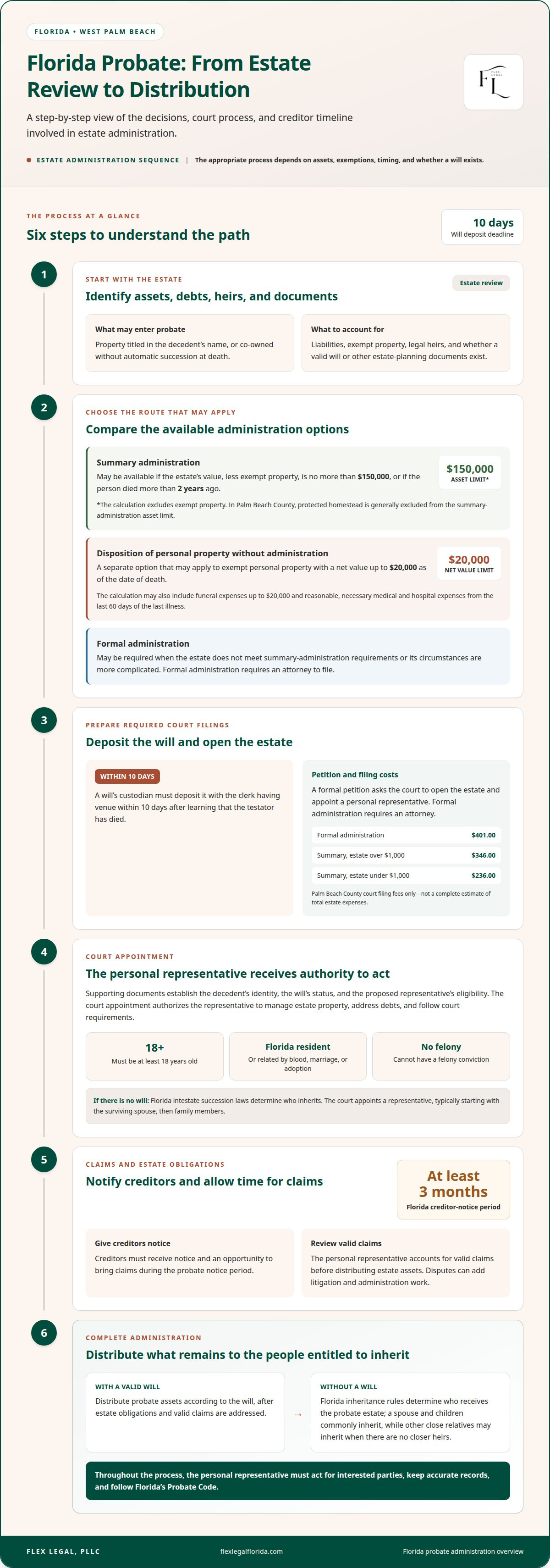
Not every Florida estate requires the same probate process. Probate is generally needed to transfer property held solely in a deceased person’s name. Summary administration may be available when the estate’s value, less exempt property, does not exceed $150,000, or when the person died more than 2 years ago, according to the Florida Legislature. West Palm Beach probate assistance starts with identifying which situation applies.
When you are handling a loved one’s affairs, delays, paperwork, and potential costs can feel difficult to manage. The appropriate process depends on the assets, whether there is a will, and the estate’s circumstances. Understanding the options can help you identify the next steps.
This guide explains when Florida probate may be required, how formal and summary administration differ, and what court costs and attorney fees may involve. It also outlines local probate steps in West Palm Beach, so you can prepare for the administration process.
Table of Contents
Is Probate Required in Florida?
Florida probate may be needed to transfer property titled solely in a deceased person’s name. The appropriate process depends on the estate’s assets, exemptions, timeline, and whether a will exists.
Summary Administration Eligibility and Asset Limits
According to the Florida Legislature, summary administration is available when the estate’s value, less exempt property, does not exceed $150,000, or the decedent has been dead for more than 2 years. The calculation excludes exempt property. In Palm Beach County, protected homestead is generally excluded from the summary-administration asset limit. An estate that does not meet the eligibility requirements, or has circumstances that make the process more complicated, may require formal administration. Formal administration requires an attorney to file.
Disposition of Personal Property
Disposition of personal property without administration is a separate option for certain estates, not another name for summary administration. It may apply to exempt personal property with a net value up to $20,000 as of the date of death. The calculation may also include funeral expenses up to $20,000 and reasonable, necessary medical and hospital expenses from the last 60 days of the last illness. Palm Beach County provides a packet with instructions and forms for this process.
Probate Without a Will
When there is no will, Florida intestate succession laws determine who inherits. A spouse and children commonly receive the probate estate, while other close relatives may inherit when there are no closer heirs. The court appoints a personal representative, typically starting with the surviving spouse, then family members. The representative identifies assets, addresses debts, and distributes property to beneficiaries under court supervision. Formal administration may be required when the estate is complicated or exceeds the applicable summary limit. An attorney can help prepare the required filings and navigate the process.
How much will it cost to probate an estate?
Probate expenses can include court filing fees, attorney fees, and costs associated with administering assets and debts. In Palm Beach County, formal administration filing costs $401.00. Summary administration filing costs $346.00 for estates over $1,000, or $236.00 for estates under $1,000. These are court filing fees, not a complete estimate of an estate’s total expenses.
To understand what needs to be handled, start by identifying probate assets, liabilities, and legal heirs. Probate assets generally include property titled in the decedent’s name or co-owned without automatic succession at death. A personal representative gathers those assets, addresses estate debts, and distributes what remains according to a valid will or Florida inheritance rules. The assets involved and any complications affect the work required.
Creditors must receive notice and an opportunity to bring claims. Florida probate must last at least three months for this notice period. The personal representative accounts for valid claims before distributing assets to beneficiaries. Disputes about a will, asset ownership, or creditor claims can add litigation and administration work.
An estate plan can affect which assets enter probate. A will directs the distribution of probate assets, while a revocable living trust can hold assets for administration under its terms. A durable power of attorney and healthcare directives address decisions during life, rather than directing probate distribution after death. Clear records help identify which documents apply and which assets the estate must administer.
Formal administration requires attorney representation under Florida law. Palm Beach County provides packets with instructions and forms for disposition without administration, and the 15th Circuit Court’s Law Library has summary-administration forms. These resources can guide eligible filings, but a formal case cannot be filed without an attorney. For help organizing estate administration and required filings, probate administration support can provide a practical next step.
How Much Does a Personal Representative’s Attorney Get Paid in Florida?
Florida probate attorney fees follow estate-value tiers, with percentage rates applying to portions of some larger estates. The amount depends on the applicable tier and services involved, so the estate’s value and the work required shape the calculation.
Filing formal administration petitions requires an attorney. The petition asks the court to open the estate and appoint a personal representative. Supporting documents establish the decedent’s identity, the will’s status, and the proposed representative’s eligibility. The court appointment gives the representative authority to act for the estate.
Florida requires a personal representative to be at least 18 years old. The representative must be a Florida resident or related to the decedent by blood, marriage, or adoption, and cannot have a felony conviction. Once appointed, the representative manages estate property, follows court requirements, and handles creditor claims and beneficiary distributions.
The role carries fiduciary duties. A representative must act for the estate’s interested parties, keep accurate records, and follow Florida’s Probate Code. Failure to comply can expose the representative to personal liability. Disputes about the will, estate records, or handling of property can complicate administration. Organized documents help clarify decisions and support efforts to resolve conflicts.
Deadlines matter. According to the Florida Legislature, a will’s custodian must deposit it with the clerk having venue within 10 days after learning that the testator has died. Florida probate also includes a creditor-notice period, giving creditors an opportunity to submit claims before estate distribution. Representatives should track court filings, notices, and claims rather than distribute assets prematurely.
For a personal representative, the key steps are to confirm eligibility, gather the decedent’s documents, file the petition, and follow court instructions after appointment. Attorney support is required for formal administration, while the representative remains responsible for carrying out assigned duties carefully.
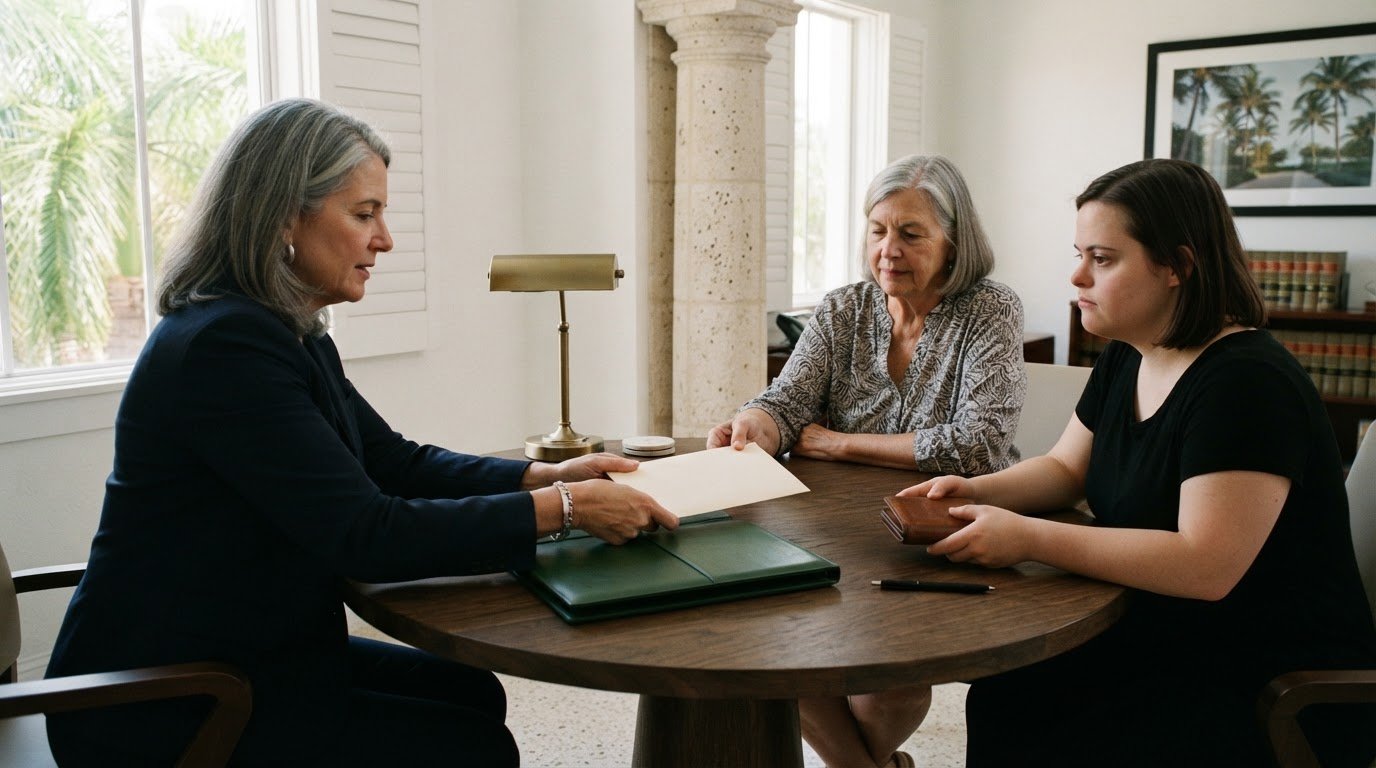
Probate assistance in West Palm Beach
West Palm Beach probate assistance involves matching local filing steps to the estate’s circumstances. In Palm Beach County, the original will must be filed with the Clerk’s Probate Division, by hand delivery or mail. At deposit, provide a short-form death certificate or the decedent’s Social Security number. A death certificate may also be e-filed in a probate case. Preparing these details can help avoid preventable delays at the start of the local probate process.
The will’s deposit deadline is important. According to the Florida Legislature, a will’s custodian must deposit it with the clerk having venue within 10 days after learning that the testator has died. If the decedent died intestate, inheritance questions and the filing route differ because no will directs distribution. The estate’s assets, exemptions, and date of death help determine whether summary administration may fit. Formal administration may be needed for a more complicated estate or one outside summary eligibility.
Palm Beach County has filing requirements beyond delivering the will. Petitions for summary and formal administration must include a completed checklist submitted through the 15th Circuit’s Online Scheduling System. A missing checklist or incomplete supporting documents can slow review. The Probate Department can answer procedural questions at (561) 355-2986. The courthouse is at 205 N. Dixie Highway, West Palm Beach, Florida 33401.
As a practical first step, organize the will, death certificate information, asset details, and names of interested parties. Then consider whether the estate may qualify for summary administration, needs formal administration, or includes property requiring additional review. Local probate support can help prepare filings and coordinate the steps that follow. Get help with probate administration for a Palm Beach County estate.
Flex Legal, PLLC: Probate Administration
Flex Legal, PLLC provides probate representation for families handling a Florida estate. The firm can assist when a loved one’s property may need court-supervised administration, when there is no will, or when you need help understanding the filings and responsibilities involved. The process can include identifying estate assets and liabilities, determining legal heirs, and preparing appropriate probate documents. The right approach depends on the estate and whether formal or summary administration applies.
With clear guidance, personal representatives can better understand the steps required to manage an estate and distribute property. For families planning ahead, Revocable or Irrevocable Living Trusts may also be relevant to how assets are administered. Flex Legal offers Flat-rate, up-front pricing… you pay what we quote you regardless of any extra work performed. No surprises, no gimmicks. To discuss probate administration for your situation, connect with Flex Legal, PLLC.
Move Forward With a Plan That Fits
Bring the estate’s immediate needs and your family’s longer-term priorities into the same conversation. West Palm Beach probate assistance can help you understand the work ahead and make informed decisions about administering an estate. The process may also prompt questions about planning for loved ones who need ongoing support or preparing for future changes in your family.
Flex Legal, PLLC offers Special Needs Planning, Revocable or Irrevocable Living Trusts, and Guardianship. These services address different planning needs, so families can consider ongoing support alongside estate administration. You do not need to have every decision settled before discussing your circumstances. A clear starting point can help you identify what needs attention now and what deserves planning for the future.
Book a Free Consultation with Flex Legal, PLLC to discuss your probate or estate-planning needs in West Palm Beach.
Frequently Asked Questions
Do I need to file for Probate?
Not every Florida estate needs the same court process, but probate may be necessary to transfer property held solely in the decedent’s name. A valid will directs distribution but does not automatically transfer probate assets. For example, a solely owned home may need probate to pass to heirs. The key question is how each asset is titled and whether it passes automatically at death.
How long does probate normally take?
Florida formal administration typically takes 12 to 15 months. A relatively simple estate may take five or six months, while summary administration can take less than a month. Timing varies with the administration type, court filings, creditor claims, and disputes that need resolution. These are different processes, so an estimate for one should not be assumed to apply to another.
Are there alternatives to formal administration for very small estates?
Yes. Summary administration may be available when the estate’s value, less exempt property, does not exceed the applicable limit, or when the decedent has been dead for more than two years. Florida also has disposition of personal property without administration for qualifying situations involving exempt personal property and certain expenses. The assets and circumstances determine which simplified route may fit.
Can I look up my probate case online?
Yes, Palm Beach County probate information can be sought through the Clerk of the Circuit Court’s online resources. Keep the decedent’s name and any case details available to narrow the search. The 15th Circuit’s Online Scheduling System serves a different function: petitions for summary and formal administration require a completed checklist submitted through that system.
Do I have to let my family know about the probate?
Florida probate requires notice to heirs with an ownership interest and other interested parties. Legal heirs may include a spouse, children, siblings, or other relatives, depending on the family situation and whether a will exists. Creditors seeking repayment may also be interested parties. The personal representative’s filings and notices help ensure that people with a relevant interest receive information about the proceeding.
How do I find out who currently has the title to the home?
Check Palm Beach County property title records through the Palm Beach County Property Appraiser’s Office or the Clerk of the Circuit Court’s official records. Search the home’s address or parcel details to locate recorded ownership information. For an inherited home, the recorded title can help clarify whether ownership changed through probate or another transfer. Paying taxes or living there alone does not establish legal ownership.
Comments