
Special Needs Trusts for Prader-Willi and Benefit Eligibility

A gift intended to support someone with Prader-Willi syndrome can put public benefits at risk if it’s given directly. A properly structured special needs trust for Prader-Willi syndrome can hold and manage assets to supplement, rather than replace, benefits such as SSI and Medicaid; money paid directly to the beneficiary may affect eligibility.
It’s understandable to want a plan that provides added support without disrupting essential benefits. This article explains how trust assets and distributions can affect eligibility, and how a trust may work alongside a will and guardianship planning. You’ll also learn what families should consider as a person with PWS approaches adulthood, and how special needs planning can help coordinate these decisions.
Table of Contents
Special needs trusts and public-benefit eligibility
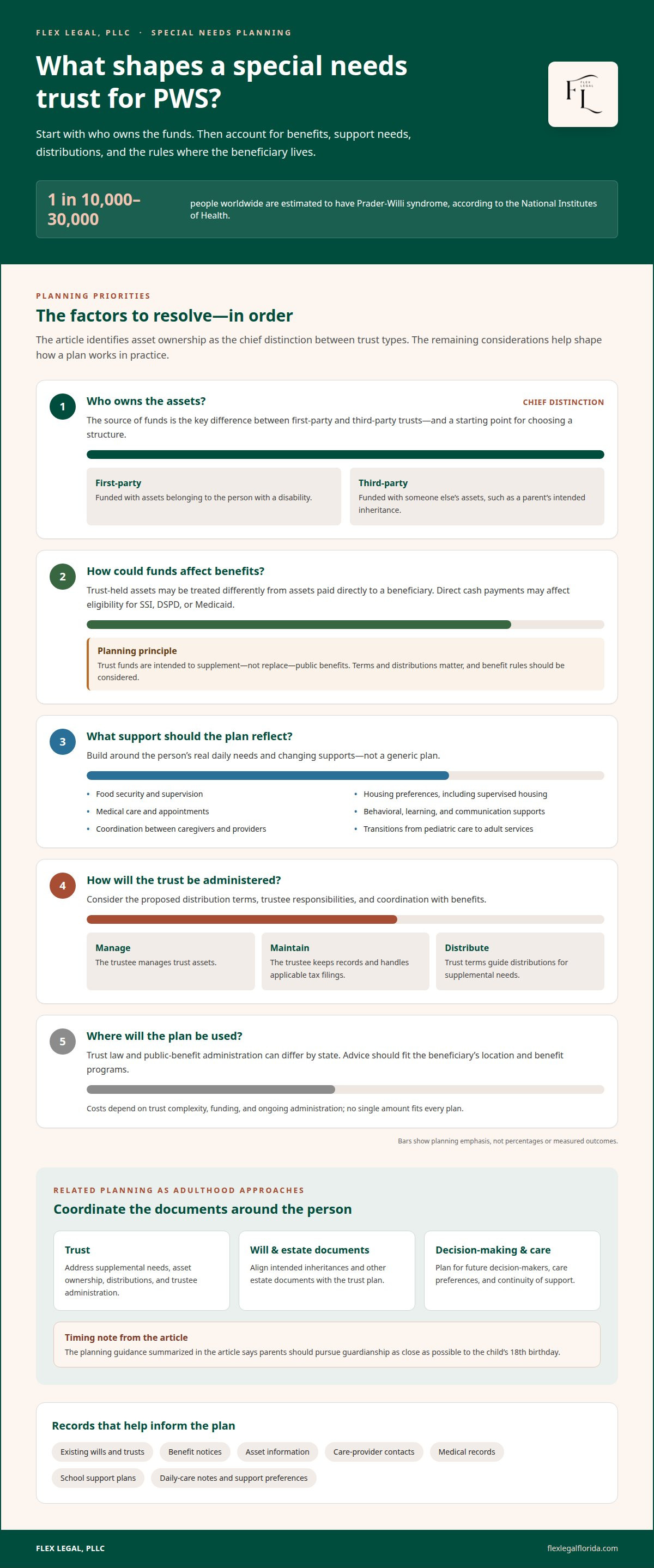
A trust can hold assets for a person with PWS while helping preserve access to needs-based benefits. The trust’s terms and distributions matter, so planning should reflect the beneficiary’s needs and current benefits.
Public-Benefit Eligibility
A special needs trust holds and manages assets for a beneficiary without treating the trust funds as the beneficiary’s direct property for certain benefit reviews. Prader-Willi syndrome affects an estimated 1 in 10,000 to 30,000 people worldwide, according to the National Institutes of Health. For a person with a PWS diagnosis, SSI and Medicaid eligibility may be affected by how funds are held and paid out.
Trust funds are intended to supplement, not replace, public benefits. Direct cash payments to a beneficiary may affect eligibility for SSI, DSPD, or Medicaid. A plan should account for medical and developmental needs, including pediatric care and adult services. PWS is genetic, and behavioral needs and metabolism may also shape the support plan.
First-Party and Third-Party Trusts
A first-party trust is funded with assets belonging to the person with a disability. A third-party trust is funded with someone else’s assets. This source of funds is the key distinction when families plan for an inheritance, settlement, or other assets intended to support the beneficiary.
For example, money already belonging to an adult beneficiary may call for different planning than a parent’s intended inheritance. Trust terms and benefit rules matter in either case. An attorney can review who owns the assets, who the beneficiary is, and the person’s benefit situation before advising on a structure.
Choosing a Trust Type for PWS
The appropriate trust type depends chiefly on who owns the funds and how they will reach the beneficiary. Parents planning for a child may want their own assets to provide support, while an adult may already own assets that need careful planning.
An attorney can assess asset ownership, benefit status, and anticipated support needs before advising on a trust structure. The plan can also account for changing needs, from pediatric care to adult services. Consider how the proposed terms address distributions, trustee administration, and coordination with benefits.
State Rules and Local Advice
Trust law and public-benefit administration can differ by state, so families need advice tailored to the beneficiary’s location. In West Palm Beach, Florida, legal guidance can address trust drafting and estate planning, while benefits advice can focus on how distributions interact with the person’s programs.
Costs depend on the trust’s complexity, funding, and ongoing administration; no single amount fits every plan. A trustee manages trust assets, keeps records, and handles applicable tax filings and distributions. An attorney experienced in special needs and public-benefits planning can assess those responsibilities alongside the family’s goals.
Estate planning for a person with PWS
Estate planning connects financial documents with a person’s support needs over time. For someone with Prader-Willi syndrome, a plan can coordinate a trust, a will, decision-making documents, and care preferences. The details should reflect the person’s clinical needs, learning style, decision-making capacity, and social supports, rather than relying on a generic estate plan.
Start by writing down what daily support looks like. Describe food security needs, supervision, housing preferences, medical appointments, and the people who coordinate care. For example, a plan can explain how a trustee should consider expenses for supervised housing while preserving access to public benefits. A special needs trust for Prader-Willi syndrome should fit the person’s current benefits and long-term goals.
An attorney can structure trust terms around supervised housing, food security, and care coordination. The attorney can also align the terms with the family’s will and other estate documents, then clarify how the trustee may use funds for supplemental needs. Families can share information from care providers and the person’s support network, including clinical recommendations and strategies that work in daily life.
Planning should anticipate transitions, too. A pediatric care team may help identify information to carry into adult care, including hormone-related appointments, behavioral supports, and learning or communication preferences. Naming trusted decision-makers and organizing key records can help keep those details accessible as caregivers change. National benefit programs and local services may both shape available resources, so the plan should reflect the person’s location.
These conversations can feel challenging, especially when parents are planning for a future they may not oversee. A clear document set gives trustees and caregivers practical direction without treating every future choice as predictable. Families can coordinate estate-planning decisions around the person’s needs and changing supports.
Guardianship, wills and special needs trusts
As a person with PWS approaches adulthood, families can coordinate a trust, a will, and decision-making plans. Each document addresses a different part of future support.
Explain how an attorney sets up a special needs trust and which documents clients need to provide.
An attorney develops trust terms around the beneficiary’s needs, assets, public benefits, and intended decision-makers. For a person with PWS, the plan can reflect support preferences and practical needs without assuming every individual requires the same arrangement. Parents should pursue guardianship as close as possible to the child’s 18th birthday, according to the planning guidance summarized for this topic.
Useful records include existing wills and trusts, benefit notices, asset information, and care-provider contact details. Families can also share relevant medical records, school support plans, and notes about food supervision, weight management, or growth hormone care. These materials help the attorney understand how daily support works and what the trust should address.
Describe how an attorney can help fund a special needs trust.
Funding means directing intended assets into the trust through an estate plan or other appropriate arrangements. An attorney can review asset ownership and coordinate the trust terms with a will so family resources are directed consistently with the plan. This matters because a gift made directly to a beneficiary may affect benefit eligibility.
For example, parents planning an inheritance can discuss how their will should provide for the trust, rather than leaving the intended support plan unclear. The attorney can also review relevant account or asset records and explain how the proposed funding approach fits the trust. Funding should reflect the family’s resources and the beneficiary’s needs.
Guardianship proceedings, a will, and trust planning address related but distinct concerns. Families can organize these decisions around the person’s quality of life, social supports, and transition from school programs to adult services. Input from providers and an association familiar with PWS can help identify practical needs for legal planning. A coordinated plan gives the individual and future decision-makers clearer direction.
What is the difference between a first-party and third-party special needs trust?
The key difference is whose assets fund the trust. A first-party trust holds assets that belong to the beneficiary, while a third-party trust holds assets belonging to someone else, such as a parent or grandparent. This distinction matters when planning for an inheritance, settlement, or funds already owned by a person with PWS.
For example, if an adult beneficiary receives an inheritance directly, those funds belong to that individual. A first-party trust is designed to hold the beneficiary’s assets under its terms. By contrast, parents can plan for their own assets to go into a third-party trust instead of passing directly to their child. The source of the funds guides which structure an attorney considers.
Both trust types can provide supplemental support, but their funding and administration differ. The trustee manages the assets according to the trust terms and the beneficiary’s needs. For a person with Prader-Willi syndrome, those needs may include supervised housing, food-related support, and care coordination. Benefit eligibility and the trust’s funding source should inform the plan.
Families can prepare by identifying who owns the assets, how they are expected to reach the trust, and which benefits the person receives. An attorney can review those details and explain how the proposed trust structure fits the family’s estate plan. This helps distinguish a parent’s planned future gift from assets the beneficiary already owns.
Clear funding instructions also help trustees understand which assets they manage and how the plan is intended to support the beneficiary. Discuss trust planning for your family to align the trust structure with the source of funds and the person’s needs.
Flex Legal, PLLC: Special Needs Planning
Flex Legal, PLLC helps families connect special needs trust decisions with broader estate planning. Its Special Needs Planning can address how a trust fits the person’s benefit situation, support needs, and family goals. This may be useful when parents are planning an inheritance or coordinating trust terms with future care.
Related planning may include a Revocable Living Trust, a Designation of Pre-need Guardian, and Trust Administration. Together, these services can help organize how assets are managed and who may take on important responsibilities. The right combination depends on the family’s plan and the beneficiary’s circumstances.
For guidance on coordinating these decisions, contact Flex Legal, PLLC.
Build a Plan That Can Adapt
The next step is to turn broad intentions into a coordinated plan that reflects the person’s changing needs and the family’s priorities. A special needs trust for Prader-Willi syndrome works best as part of that larger picture, with clear roles for the people who will help manage support over time.
Flex Legal, PLLC offers Special Needs Planning, Revocable Living Trusts, and Guardianship Proceedings to help families coordinate these connected decisions. Planning together can give trustees and family members a clearer framework for carrying out the person’s wishes as circumstances change.
Start a conversation about the plan your family wants to put in place. Contact Flex Legal, PLLC to discuss your estate-planning needs, and take a considered step toward future support.
Frequently Asked Questions
What is a special needs trust and how can it benefit someone with Prader-Willi syndrome?
A special needs trust for Prader-Willi syndrome is a legal arrangement in which a trustee manages assets for a beneficiary. It can provide added support without requiring the beneficiary to manage every financial decision. For example, a trustee may arrange a planned payment to a service provider while keeping the family’s support plan organized. The trust terms should match the person’s needs and benefit situation.
Can a person with Prader-Willi syndrome qualify for SSI, Medicaid, or other disability benefits?
Yes, a person with PWS may qualify for SSI, Medicaid, or other disability benefits, but a diagnosis alone doesn’t establish eligibility. Each program has its own criteria, and the person’s circumstances and finances matter. A trust is a planning tool, not automatic approval. In West Palm Beach, families can coordinate trust planning with advice focused on the benefits the person receives or may seek.
How does a special needs trust affect SSI and Medicaid eligibility and benefit limits?
Assets held in a properly structured special needs trust aren’t counted as a resource under the planning approach described here. However, money paid directly to the beneficiary may affect eligibility for SSI, Medicaid, or other benefits. There isn’t one benefit limit that applies across every program. The trust terms, payment method, and program involved all matter when assessing how support may affect benefits.
What expenses can a special needs trust pay for without reducing public benefits?
No universal list of expenses guarantees that benefits won’t change. A trust is intended to supplement public benefits with additional support, and the effect of a payment may depend on its purpose and how it is made. For example, giving cash directly to the beneficiary may raise eligibility concerns. Trustees should follow the trust terms and consider benefit rules before making distributions.
What are the Medicaid payback rules for first-party special needs trusts?
Medicaid payback requirements should be addressed when planning a first-party trust, which holds assets belonging to the beneficiary. The trust terms and applicable Florida requirements affect how remaining funds are handled and whether Medicaid claims apply. This differs from a third-party trust funded with someone else’s assets. Before transferring assets, families should have an attorney review the trust language and provisions for the beneficiary’s lifetime and afterward.
What are the costs and ongoing tax and trustee duties for a special needs trust?
Costs depend on the trust’s complexity, funding, and ongoing administration. The trustee manages assets, keeps records, handles applicable tax filings, and makes distributions under the trust terms.


Comments