
Special needs trust for inheritance money and benefit rules

An inheritance can put essential benefits at risk if it goes directly to a person who relies on needs-based support. In Florida, most adult Medicaid recipients and SSI beneficiaries cannot have more than $2,000 in countable assets at any time. A properly structured special needs trust for inheritance money can hold funds for the beneficiary’s supplemental needs while helping preserve eligibility.
It’s understandable to want an inheritance to provide lasting support without disrupting public benefits. The right approach depends partly on who owns the money: an inheritance received by the beneficiary is treated differently from funds a family member leaves in a trust for them.
This article explains how special needs trusts work, how first-party and third-party trusts differ, and what Medicaid payback can mean for funds left after the beneficiary dies. You’ll also learn how trust distributions can support a person while benefits continue, and why the trust’s terms and trustee matter.
Table of Contents
What's a Special Needs Trust For, and How Can It Help?
A special needs trust holds funds for a person with disabilities while supporting access to needs-based benefits. In Florida, most adult Medicaid recipients and SSI beneficiaries cannot have more than $2,000 in countable assets at any time.
Protecting Needs-Based Benefit Eligibility
A special needs trust can hold assets for a beneficiary instead of placing them directly in the beneficiary’s name. Assets in a third-party trust don’t affect an SSI recipient’s access to benefits, making trust ownership important when parents or other family members plan financial support.
A trustee manages the funds and makes distributions for the beneficiary. A pooled trust offers another structure: a nonprofit combines resources for investment while maintaining a separate account for each beneficiary. Individuals of any age may join a pooled special needs trust.
State rules can shape how a trust is drafted and administered, while Medicaid and SSI eligibility depend on the applicable program rules. Florida’s countable-asset limit makes ownership and trust terms especially relevant to benefit planning.
Effects of Gifts and Inheritances
An outright gift or inheritance can become an asset belonging to the beneficiary, potentially affecting needs-based eligibility. In the United States, a child’s eligibility for some needs-based government benefits can be affected by outright gifts once the child is 18 or older.
For example, an inheritance paid directly under a will may push an adult beneficiary over Florida’s $2,000 countable-asset limit. Receiving money can also interrupt benefits, and regaining them may be difficult. Planning before distribution gives the family an opportunity to direct funds into an appropriate trust structure.
Delaying planning can leave inheritance money in the beneficiary’s name and put benefit eligibility at risk. Timing matters: the source of the funds and who legally owns them help determine which trust approach may fit.
Trust Distributions and Benefit Eligibility
A trustee’s payment choices can affect benefits, even when the trust itself is structured appropriately. Trust funds can pay providers directly for supplemental needs, such as education, transportation, therapy, technology, or recreation.
Direct payments for food or shelter can reduce SSI benefits, while cash paid to the beneficiary is generally a poor fit for preserving eligibility. The trustee should follow the trust terms and consider how each payment affects the beneficiary’s support.
Trust setup and administration costs depend on drafting and management needs. Trust earnings don’t grow tax-deferred, and trust assets may be taxable. These tax and payment details belong in the planning discussion alongside benefit rules.
Third-party special needs trusts
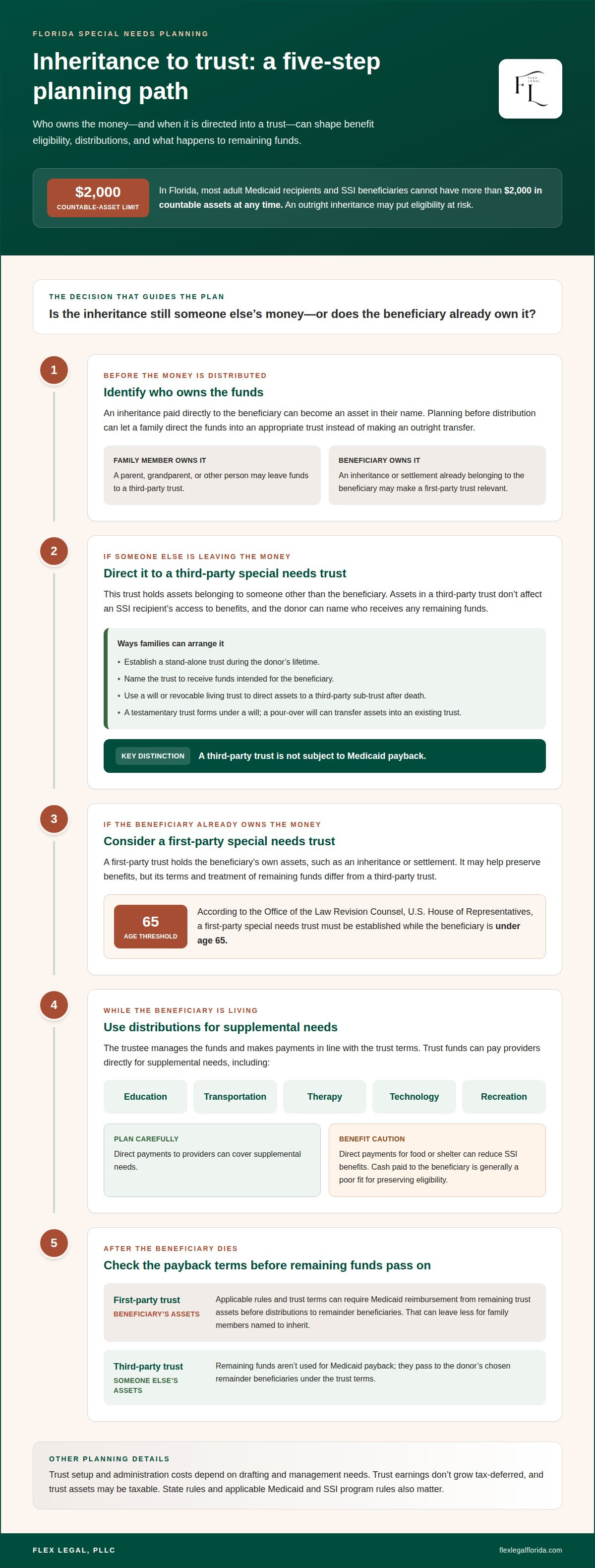
A third-party special needs trust holds assets belonging to someone other than the beneficiary, such as a parent or grandparent. It can help a family leave an inheritance for a disabled loved one without transferring the money directly into the beneficiary’s name. Assets in this trust don’t affect an SSI recipient’s access to benefits.
The donor also controls how remaining funds are distributed after the beneficiary dies. A third-party trust isn’t subject to Medicaid payback, so remaining assets can pass to the remainder beneficiaries named in the trust. This can be a practical option for an estate plan that supports the beneficiary and directs where funds go afterward.
Families can plan for future gifts through a stand-alone trust established during the donor’s lifetime. Relatives can name the trust to receive funds intended for the beneficiary. Alternatively, a family member’s will or revocable living trust can direct assets to a third-party sub-trust after death. A testamentary trust forms under a will, while a pour-over will can transfer assets into an existing trust.
Timing depends on who owns the inheritance. If a parent or relative is preparing an estate plan, directing the inheritance to a third-party trust before distribution can avoid an outright transfer to the beneficiary. If the beneficiary already owns an inheritance or settlement, a first-party special needs trust may be relevant. According to the Office of the Law Revision Counsel, U.S. House of Representatives, a first-party special needs trust must be established while the beneficiary is under age 65.
A first-party trust holds the beneficiary’s own assets, unlike a third-party trust funded with another person’s money. It may help preserve benefits, but its terms and treatment of remaining funds differ. The choice affects how the trust can pay expenses and who receives anything left. For guidance on structuring an estate plan around these distinctions, explore special needs planning.
Medicaid payback requirements
Medicaid payback determines whether funds remaining after a beneficiary dies must reimburse Medicaid for care. The answer depends partly on who funded the trust and whose assets it holds. A self-settled, or first-party, special needs trust holds the beneficiary’s own money, such as an inheritance or settlement. Its terms and applicable rules can require repayment before remaining assets pass to other beneficiaries.
When the beneficiary dies, the trustee reviews the trust’s payback provisions and identifies any remaining funds. If reimbursement is required, Medicaid expenses are paid from trust assets before distribution to remainder beneficiaries. That can leave less for family members named to inherit. The potential effect makes the trust’s funding source and payback language important parts of financial planning.
A third-party trust follows a different path because someone other than the beneficiary contributed its assets. Its remaining funds aren’t used for Medicaid payback; the donor’s chosen remainder beneficiaries receive them under the trust terms. This difference matters when parents or other family members plan an inheritance. They can specify who receives remaining assets instead of using the beneficiary’s own money to fund the trust.
A pooled trust is established and managed by a nonprofit, with a separate account for each member and resources combined for investment. Its terms may direct remaining funds to reimburse the government for the beneficiary’s care and allocate a portion to the nonprofit managing the trust. This differs from an individually managed third-party trust. Reviewing the funding source, payback clause, and remainder instructions together clarifies what happens after death.
For example, if an inheritance already belongs to a beneficiary, placing it in a first-party trust may preserve eligibility, but payback provisions can affect what remains for relatives. If a parent funds a third-party trust, its remaining assets can instead pass to named beneficiaries without Medicaid payback. The distinction connects benefit protection during the beneficiary’s life with the family’s plans for assets afterward.
Special needs trusts and inheritance money
An inheritance can support a person with disabilities, but ownership matters. If a will leaves money directly to a beneficiary receiving needs-based benefits, those funds may affect eligibility. Estate planning can instead direct a future inheritance into a trust managed for the beneficiary. The central takeaway: plan how money will transfer before it becomes the beneficiary’s personal asset.
For example, a parent or grandparent can name a third-party trust in a will or revocable living trust. The trustee can then manage the inheritance and pay for supplemental needs, such as transportation, education, therapy, assistive technology, or recreation. These expenses can provide support beyond government programs. The trust terms guide distributions, while the donor can name who receives remaining funds after the beneficiary dies.
If the beneficiary has already received an inheritance, the situation changes because the money belongs to that person. A first-party trust may hold the beneficiary’s assets, including inheritance funds, but Medicaid payback provisions may apply to what remains. The trustee, funding source, and trust terms therefore affect both current benefit planning and what may pass to family later.
A family member holding the inheritance informally doesn’t give it the same legal structure as a trust and may create legal or tax issues. Instead, an attorney can assess whether the money is still part of the estate, has already transferred, or came from a settlement. Those details shape the available planning options. Keep the beneficiary’s needs, benefit eligibility, intended expenses, and remainder wishes connected in the plan.
For an inheritance that hasn’t been distributed, address the trust in the estate plan before directing funds to the beneficiary. For money already received, get guidance on its ownership and appropriate trust structure before making further transfers. Plan how inheritance funds can support a beneficiary.
Flex Legal, PLLC: Special Needs Planning
Flex Legal, PLLC helps families address inheritance and benefit concerns through Special Needs Planning. This can include considering who will fund a trust, how its terms support the beneficiary, and how distributions fit alongside public benefits. For parents planning ahead, a Revocable Living Trust can coordinate inheritance instructions with broader estate planning. A Designation of Pre-need Guardian can also record a parent’s choice for a future guardianship proceeding.
If a trust already exists, Trust Administration can help address its ongoing management. The right next step depends on whether the inheritance is still part of an estate plan or already belongs to the beneficiary. Contact Flex Legal, PLLC to discuss special needs planning for your family’s situation.
Build a plan your family can carry forward
The next step is to turn family intentions into clear, coordinated decisions. Consider who should manage the trust, what support matters most to the beneficiary, and how the plan can adapt as needs change. A thoughtful conversation among relatives can also help everyone understand their role and avoid conflicting assumptions about future gifts.
Planning for a special needs trust for inheritance money can connect trust decisions with broader estate planning. Flex Legal, PLLC offers Special Needs Planning, Revocable Living Trusts, and Guardianship Proceedings to help families address related needs. The focus is a plan shaped around the beneficiary’s circumstances, family priorities, and how support may evolve.
Contact Flex Legal, PLLC for guidance on the next step for your family. With a clear plan in place, you can move forward with greater confidence and purpose.
Frequently Asked Questions
What Is a Trust, and How Does It Work?
A trust is a legal arrangement that assigns property to a trustee to manage under written terms for beneficiaries. For example, a relative can place investments or an inheritance in a trust and name someone to oversee them. The trustee follows the document’s instructions for handling and distributing assets. The trust terms define its purpose, management responsibilities, and who may receive property.
Why Are There Different Types of SNTs?
Special needs trusts differ because the source of their funds and how they’re established affect their structure. A family planning with its own assets may choose a third-party arrangement, while funds already belonging to a beneficiary call for a different analysis. A pooled trust offers another structure, managed by a nonprofit with separate beneficiary accounts. The appropriate type depends on ownership, goals, and distribution plans.
What is a special needs trust for inheritance money?
A special needs trust for inheritance money is an arrangement designed to hold funds for a beneficiary with disabilities under a trustee’s management. It can allow the trust to pay for supplemental needs while preserving a family’s instructions for how funds are used. For instance, a grandparent can arrange for an inheritance to support education or transportation rather than leaving cash directly to the beneficiary.
Can someone with a disability inherit money directly without losing SSI or Medicaid?
Direct inheritance can affect eligibility for SSI or Medicaid if it increases countable resources beyond the program’s limit. In Florida, most adult Medicaid recipients and SSI beneficiaries cannot have more than $2,000 in countable assets at any time. The result depends on the benefit program and how it treats the inherited asset. Planning the distribution before the beneficiary receives the money can help avoid an unintended interruption.
What are the differences between first-party and third-party special needs trusts?
The key difference is who owns the funds placed in the trust. A first-party trust holds the beneficiary’s own assets, such as an inheritance already received; a third-party trust holds money contributed by someone else. That distinction can affect what happens to remaining funds after the beneficiary dies. For example, a donor can name remainder beneficiaries in a third-party trust, while first-party funds may be subject to Medicaid payback rules.
How can an inheritance be redirected or disclaimed into a special needs trust?
Families can plan for future inheritances by naming a properly structured trust in estate documents before assets pass to the beneficiary. If the beneficiary is already entitled to an inheritance, a disclaimer is not simply a direction to send the money into a trust. Its effect depends on the circumstances and applicable rules. Get legal advice before accepting, disclaiming, or transferring inherited assets, since the sequence can affect benefits and planning options.



Comments