
Planning for incapacity in West Palm Beach: What Happens Without a Plan

Without an incapacity plan, your family may be unable to manage your finances or make decisions for you, and a Florida court may need to appoint a guardian. Planning for incapacity in West Palm Beach means deciding in advance who can act on your behalf and documenting your wishes. To sign a power of attorney, you must understand what the document is and what authority it grants.
It’s understandable to assume loved ones can step in when illness or an accident makes decisions difficult. Without the required legal authority, however, they may need court involvement. Planning ahead gives your chosen decision-makers clearer guidance during a stressful time.
This article explains what may happen without a plan, how Florida guardianship works, and why timing matters when signing a durable power of attorney. It also explores how West Palm Beach families can prepare for changing health, family, and financial needs.
Table of Contents
What is Incapacity Planning?
Incapacity planning prepares legal documents for health care and financial decisions if you can’t make them yourself. In Florida, it can identify trusted decision-makers and record your preferences before illness or injury affects your ability to communicate.
Health and Personal Care Decisions
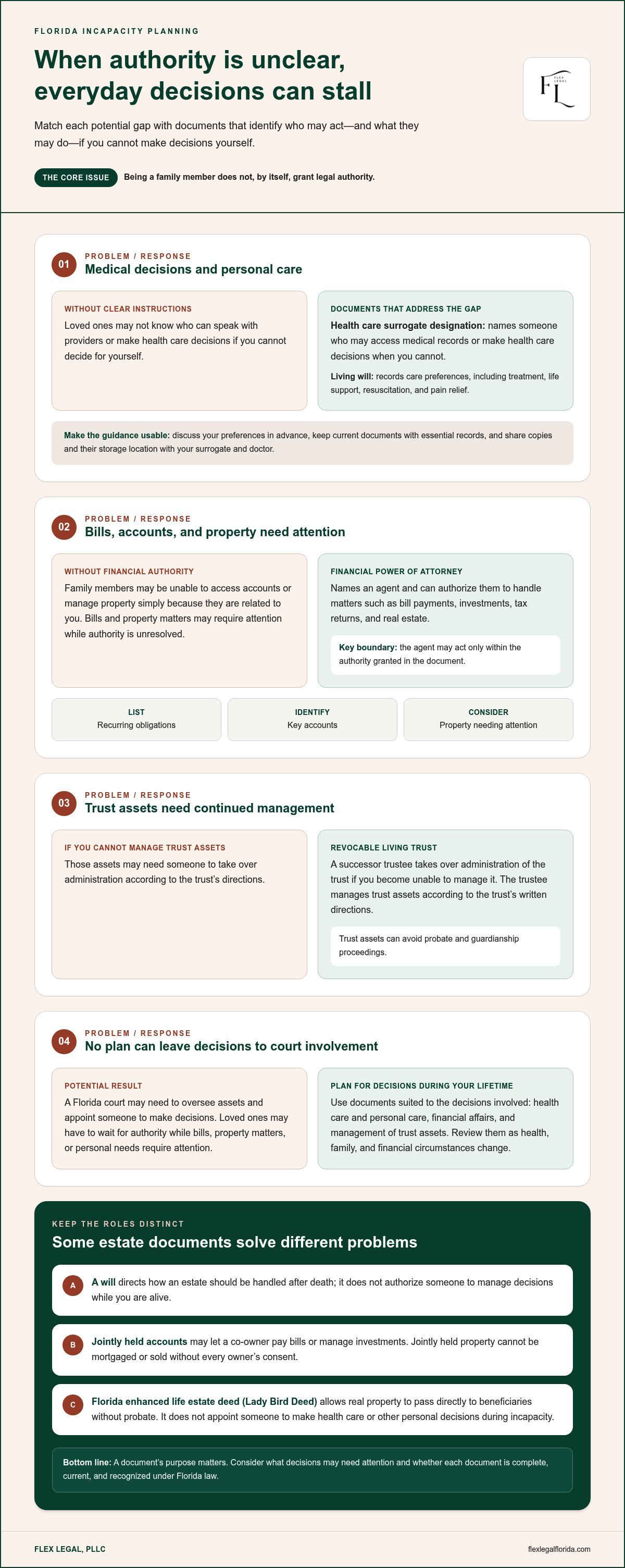
A health care surrogate designation identifies who may access your medical records or make health care decisions when you can’t decide for yourself. Choose someone who understands your beliefs, communicates clearly, and can speak for you about care and personal matters. Discuss your preferences about surgery, medical procedures, and pain relief before a crisis, so your surrogate has practical guidance.
Keep current documents with essential records and share copies with your surrogate and doctor. Tell them where the latest version is stored, and replace outdated copies when you revise your plan. Sharing documents with relevant financial institutions can also help make your instructions accessible to the people handling your affairs.
Financial Affairs and Property Management
A financial power of attorney can authorize an agent to manage matters such as bill payments, investments, tax returns, and real estate. Choose someone who can handle your financial responsibilities and understands how you want your assets managed. For example, that person may need to keep household bills current while you’re unable to manage your accounts.
List recurring obligations, key accounts, and property that may need attention. An agent may act only within the authority granted in the document, so be clear about which decisions you’re delegating. Without that authority, family members may not be able to access accounts or manage property simply because they’re related to you.
Incapacity and Decision-Making
Mental incapacity can affect a person’s ability to understand information, retain it long enough to decide, weigh choices, or communicate a decision. It may be temporary or permanent, and illness, injury, dementia, stroke, heart attack, or an accident can contribute. The relevant question is how the condition affects the specific decision at hand.
Frontotemporal dementia can affect behavior, communication, and decision-making. Bruce Willis was 67 when he was diagnosed with frontotemporal dementia, after retiring from acting in 2022. His experience illustrates why planning shouldn’t depend on age alone. Preparing documents while you can understand their purpose gives your chosen decision-makers guidance if your circumstances change.
Living Wills and Revocable Trusts
A Florida living will records medical preferences, including instructions about treatment, life support, resuscitation, and pain relief. To create one, write down the care you want or refuse and document those preferences in a living will. Pairing it with a health care surrogate designation can identify who should speak for you if you can’t communicate.
A Florida revocable living trust holds assets that you may invest or spend during your lifetime. If you become unable to manage the trust, your successor trustee takes over its administration. Trust assets can avoid probate and guardianship proceedings, while the trustee manages them according to the trust’s written directions.
Reviewing your documents with an estate planning attorney can help you assess whether they still match your wishes, family circumstances, and assets. A will addresses what happens after death, while incapacity documents and a trust can address different needs during your lifetime. Keeping each document’s purpose clear helps your family understand which instructions apply.
What happens without an incapacity plan?
Without an incapacity plan, loved ones may lack legal authority to manage your affairs. A Florida court may need to oversee your assets and appoint someone to make decisions. Family members may have to wait for authority while bills, property matters, or personal needs require attention. An estate plan should address incapacity, not only what happens after death.
A will directs how your estate should be handled after you die; it doesn’t authorize someone to manage your decisions while you’re alive. Jointly held accounts may let a co-owner pay bills or manage investments, but jointly held property cannot be mortgaged or sold without every owner’s consent. That arrangement may not match your wishes or meet every financial need.
Estate planning strategies can address different transitions. A Florida enhanced life estate deed, also called a Lady Bird Deed, allows real property to pass directly to beneficiaries without probate. It addresses the property’s transfer after death, but doesn’t appoint someone to make health care or other personal decisions during incapacity. The right documents depend on what you own and which decisions may need attention.
Reviewing your estate plan with an estate planning attorney can help identify gaps and outdated instructions. Ask whether each document is complete, current, and recognized under Florida law. Bring your will, trust documents, property information, and existing decision-making documents to the consultation. For example, a change in property ownership could affect whether your documents still work together as intended.
To find an estate planning attorney in West Palm Beach, look for a Florida attorney who handles estate planning and incapacity documents. Consider how the attorney explains each document’s role, reviews your estate as a whole, and accounts for your family and property circumstances. Clear answers should help you understand which instructions apply during incapacity and which apply after death.
During the review, discuss who could manage a business interest or oversee assets held in your sole name. If you own a business, consider who could handle its affairs if you become incapacitated. Families can also revisit plans after marriage, separation, a child’s birth, a spouse’s death, or a move to another state. These changes may affect whom you trust and how your estate plan should work.
For a focused review of incapacity and estate planning documents, estate planning guidance can help you consider how your instructions fit together.
Court-appointed guardianship or conservatorship
In Florida, a court may need to authorize someone to act when a person can no longer make decisions. Understanding the court’s role helps families prepare for the decisions and documents involved.
Court-Appointed Decision-Making
Court-appointed guardianship is a process for giving a guardian authority over decisions or assets for a person who lacks capacity. A judge initially decides who may act, and the arrangement involves court oversight. If someone has lost the capacity to sign a power of attorney, family members may need to petition the guardianship court for authority. Until then, relatives may lack the legal power to manage that person’s affairs.
For example, a daughter may know her father’s usual preferences but still be unable to access his accounts or make decisions for him without authority. A Florida elder law attorney can explain how court involvement relates to his needs and existing documents.
Nominating a Guardian or Committee
A nomination of committee records whom you would want appointed as your guardian if a court proceeding becomes necessary. Naming a trusted person tells the court your preference, but doesn’t itself grant that person authority to act. Consider who can communicate with family, understand your wishes, and reliably manage responsibilities.
Consider a practical example: your preferred nominee may live nearby and understand your routines, while another relative may be better placed to handle financial details. Discuss the choice with those involved and make your preference clear in your planning documents. A lawyer can explain how the nomination fits with your other incapacity documents.
Guardianship Avoidance
Guardianship avoidance means preparing documents and arrangements that may let trusted people act without seeking court authority. It doesn’t guarantee that a court proceeding will never be needed. The key is whether your documents address the decisions and assets requiring attention, and whether someone has authority to manage them.
A durable power of attorney can authorize an agent to manage financial matters, while a health care surrogate designation addresses health care decisions. A living trust can provide for a successor trustee to manage trust assets if you can’t manage them yourself. These tools serve different purposes, so one document may not cover every need. Review who is named and what each document authorizes.
Prepare for a consultation by gathering existing documents and listing decisions that could arise. Include questions about accounts, property, medical preferences, and a possible guardian nominee. If a family member’s condition has changed, describe which decisions they can still understand and communicate. These details help a lawyer assess whether existing arrangements fit the person’s current circumstances.
Planning also means discussing responsibilities before a crisis. A named agent or nominee should understand the role and know where relevant documents are stored. Tell a trusted family member how to locate the signed documents and who else has copies. Clear information can help relatives understand when to use a document and when court authority may still be needed.
Legal capacity to sign a power of attorney
In Florida, you must understand what a power of attorney is and what it does when you sign. Incapacity documents include a durable power of attorney, a health care surrogate designation, and a living will, each addressing different decisions.
Financial and Durable Powers
A financial power of attorney authorizes an agent to handle financial matters within the document’s terms. A durable power of attorney remains effective if you become mentally incapacitated, while an ordinary power of attorney ends in those circumstances. This distinction matters because an accident or illness could leave bills, investments, tax returns, or property decisions needing attention.
“Enduring power of attorney” describes a document appointing someone to manage financial and legal affairs, but Florida planning commonly uses the term durable power of attorney. Choose an agent you trust, then consider which responsibilities the document should cover. Its authority can be broad, so both the agent’s judgment and your instructions matter.
Signing and Document Requirements
Florida incapacity documents don’t all follow the same signing process. Witness and notarization requirements depend on the specific document, so follow its applicable execution rules rather than assuming one document’s requirements apply to another.
For a power of attorney, it’s essential to sign while you can understand its purpose and authority. If you can’t understand what it does, a family member may need to seek authority through guardianship court. A lawyer can explain the document’s terms and signing process before you execute it.
Capacity depends on understanding the decision, not simply having a diagnosis. A person may need to understand the document’s purpose, identify the agent, and grasp the authority being granted. Discuss practical examples, such as paying bills or managing property. If the signer can’t retain or evaluate that information, the document may not reflect a legally informed choice.
Pair financial authority with separate health care planning. A health care surrogate designation identifies who may access medical records or make health care decisions when you can’t. A living will records treatment preferences, including instructions about life support or resuscitation. These documents don’t replace a financial power of attorney, because each covers a different area.
Before signing, review the document’s scope, agent, and instructions together. Consider how the agent can handle routine bills, investments, tax filings, and real estate, and whether those powers match your wishes. Keep the signed document accessible to the agent and relevant institutions. Revisit it after a change in your finances, relationships, or preferred decision-maker.
Planning early preserves your opportunity to make an informed choice. Once capacity is lost, even temporarily or partially, signing a power of attorney may no longer be an option in Florida. An attorney can explain the document before you sign, so you understand the role you’re assigning and the decisions it allows your agent to make.
Planning ahead for West Palm Beach families
For West Palm Beach families, an incapacity plan should reflect real family and financial circumstances, not just a set of documents. Accidents and illness can affect adults at any age, so planning isn’t only for older people. Start by identifying who would need to make decisions, which assets require attention, and what guidance relatives would need if you couldn’t communicate.
Family changes can make an existing plan less useful. Marriage, separation, a child’s birth, a spouse’s death, or a move to another state may prompt a review. After a move, for example, check whether your documents still reflect your decision-makers and property. A blended family may also need clear instructions to reduce the risk of disagreements about who should act or what care you prefer.
Health changes can be a practical reason to develop a plan. An Alzheimer’s diagnosis, cancer, or another debilitating illness may prompt someone to consider who will manage finances and express medical preferences. If you’ve seen a relative’s care or finances left unmanaged, use that experience to discuss what guidance your own family would need. Planning ahead can give relatives direction instead of leaving them to guess.
Consider how different arrangements address different assets. A revocable living trust can hold and manage assets during incapacity, with a successor trustee taking over if you can’t manage the trust. Review which assets are titled in your name and which are held in trust. Title matters: assets in a person’s name may need to go through probate before beneficiaries receive them.
Families supporting a disabled or chronically ill relative may also need to consider special needs planning. A special needs trust can allow a person to receive income without reducing eligibility for public assistance disability benefits. The trust must be administered by a trustee, not its beneficiary. If you’re also considering Medicaid planning, discuss how it fits with the broader plan rather than treating each decision in isolation.
Business owners should identify who could manage business interests if illness or injury prevents them from acting. Consider who can keep essential decisions moving and what information they would need. A plan covering both household assets and business responsibilities can help families understand what needs attention during a difficult transition.
Make review part of the plan. After a family change, diagnosis, or move, revisit your chosen decision-makers, asset titles, and written instructions. Keep current documents accessible to the people expected to use them, and tell them where to find them. These practical steps help your plan adapt as your family’s circumstances change.
Discuss incapacity planning options to consider how your family’s needs, assets, and future decisions fit together.
Flex Legal, PLLC: Special Needs Planning
Flex Legal, PLLC helps individuals and families address estate planning needs through Special Needs Planning, Revocable Living Trusts, Guardianship Proceedings, and a Last Will and Testament. Consider seeking guidance when a loved one’s disability or chronic illness raises questions about protecting their interests, or when you need to plan who may manage assets and decisions if you become incapacitated.
Special Needs Planning helps families consider how a trust may support a disabled or chronically ill beneficiary while preserving eligibility for public assistance disability benefits. A revocable living trust can also provide for management of trust assets during incapacity. The right approach depends on your family’s needs, assets, and goals.
To discuss your planning needs, contact Flex Legal, PLLC or visit flexlegalflorida.com.
Make your next step a clear one
Planning for incapacity in West Palm Beach is a personal process shaped by your priorities, relationships, and responsibilities. A useful next step is to write down what matters most: whom you trust, what guidance they may need, and which family or financial circumstances deserve attention. Those notes can focus a planning conversation and help turn broad concerns into decisions you can address.
Flex Legal, PLLC offers Special Needs Planning, Revocable Living Trusts, and Guardianship Proceedings to help families address different planning needs. The right focus depends on your situation, whether you’re considering support for a loved one with special needs, trust planning, or court-related guardianship matters.
Start a conversation about the choices that matter to your family. Contact Flex Legal, PLLC to discuss your planning needs and next steps. Thoughtful preparation can help you move forward with greater clarity and a plan that reflects your wishes.
Frequently Asked Questions
What is the key to ensuring you are prepared for the future?
The key is to make your choices clear while you can explain them and keep them aligned with your family’s circumstances. For planning for incapacity in West Palm Beach, identify who should handle health decisions, finances, and property, then tell those people what responsibilities they may face. A family business owner, for example, may need a different financial decision-maker than someone whose main concern is medical guidance.
How do I create a Florida durable power of attorney?
Start by choosing a trusted agent and deciding which financial matters they may handle. A durable power of attorney can authorize financial decisions and remains effective if you become mentally incapacitated. You must understand the document and the authority it grants when you sign. Discuss practical situations, such as managing investments or filing tax returns, so its scope reflects the decisions you want to delegate.
What are the requirements for a Florida health care surrogate designation?
A Florida health care surrogate designation identifies who may access your medical records or make health care decisions if you can’t decide for yourself. Choose someone who understands your treatment preferences and can communicate them clearly. Discuss choices such as surgery, pain relief, and life support before completing the document. Make sure your surrogate knows where to find it and which medical providers should receive a copy.
What happens if someone in Florida becomes incapacitated without a power of attorney or health care surrogate?
Without these documents, loved ones may lack authority to manage finances or make health care decisions. If the person has lost capacity, family members may need to petition a Florida guardianship court for authority to act. A judge initially decides who is authorized, and the proceeding involves court oversight. Until authority is established, relatives may be unable to access accounts or make decisions for the person.
How does Florida guardianship work, and what are its costs and risks?
Florida guardianship involves a court process to authorize someone to make decisions or manage assets for a person who lacks capacity. A judge initially determines who may act, and court oversight continues. Costs can include legal representation and expenses associated with court proceedings and ongoing administration. Risks include reduced control over personal or financial decisions, court supervision, and disagreements among relatives about who should serve.



Comments