
How to Avoid Will Contests in Florida and Reduce the Risk

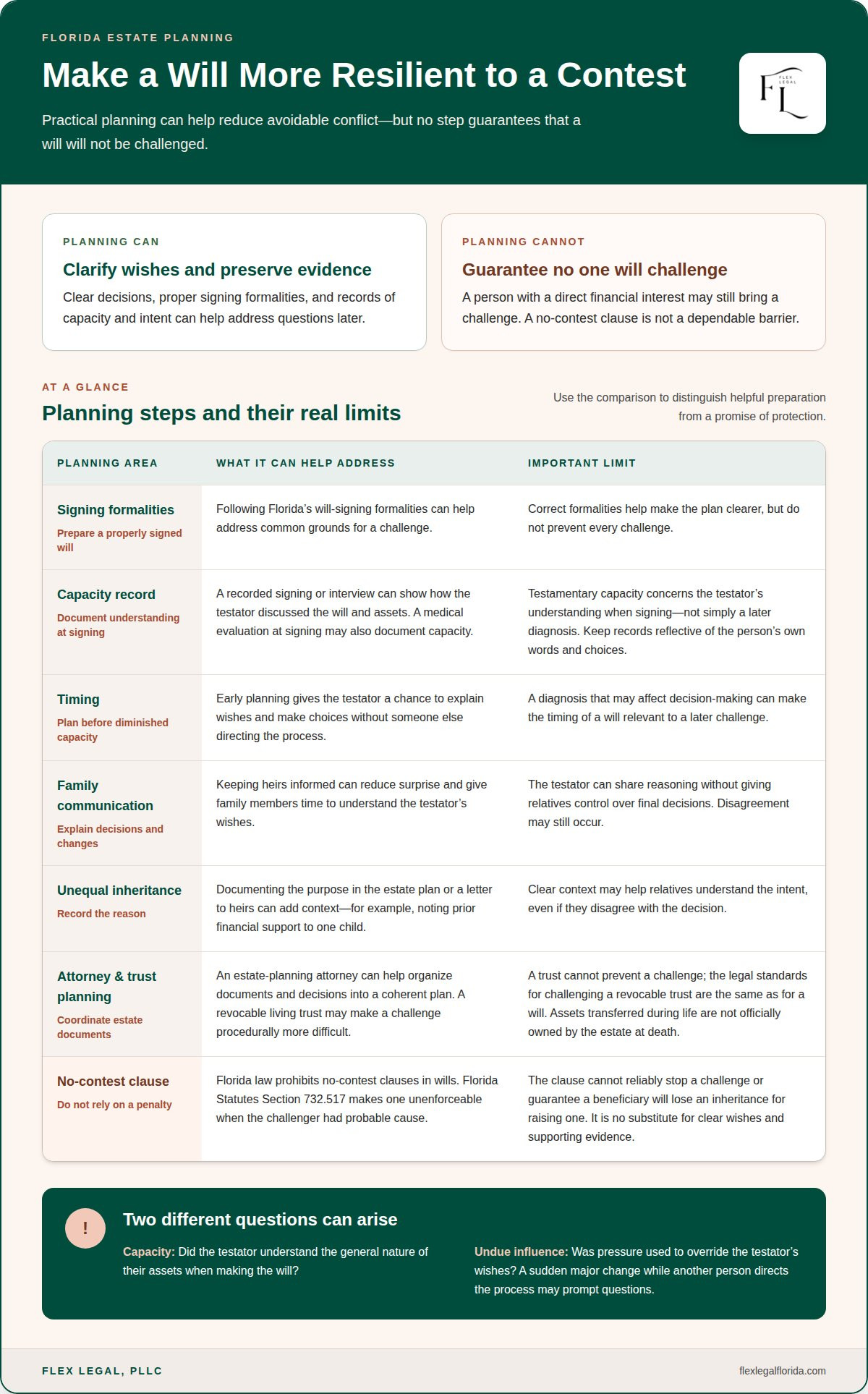
You can reduce the risk of a will contest, but you cannot guarantee that no one will challenge a will. The best way to address how to avoid will contests in Florida is to prepare a properly signed will, document the testator’s decision-making capacity, and keep the estate plan current and clear. A no-contest clause does not reliably prevent a challenge under Florida law.
It is understandable to want your wishes followed without adding stress or conflict for the people you care about. This article explains what can make a Florida will more resilient, why no-contest clauses may offer little protection, and who may have standing to challenge a will. Careful planning, clear communication, and proper signing formalities can help reduce the risk of a dispute, though someone with a direct financial interest may still bring a challenge.
Table of Contents
Why can’t you include a ‘no contests’ clause?
Florida law does not allow a will’s no-contest clause to reliably stop a challenge. Can a Florida no-contest clause prevent beneficiaries from contesting a will? No. A beneficiary may still challenge a will, and the clause may not penalize them for doing so.
Florida’s Ban on No-Contest Clauses
A no-contest clause attempts to penalize someone who challenges a will, often by threatening to reduce or forfeit their inheritance. Florida prohibits these clauses in wills, so including one does not create a dependable barrier to probate litigation. For example, a beneficiary cannot be assumed to lose an inheritance simply for raising a challenge. The clause is no substitute for clear wishes and sound evidence.
Enforceability of No-Contest Clauses
In Florida, a no-contest clause in a will is generally unenforceable, so it cannot guarantee that an interested person will avoid litigation. Florida Statutes Section 732.517 specifically makes a no-contest clause unenforceable when the person challenging the will had probable cause. That rule matters when evidence supports legitimate grounds, such as concerns about how the will was created. A clause is not a substitute for addressing those concerns.
Probable cause focuses on the basis for a challenge, not simply on whether a beneficiary feels disappointed. Someone considering a contest may point to evidence suggesting a problem with the will or its signing. In Florida probate, the court addresses the challenge; threatening forfeiture does not resolve the underlying issue. Legal guidance can help clarify how the clause and available evidence relate to a specific dispute.
For estate planning, focus on clear documents and a reliable record of the will-maker’s wishes rather than relying on a penalty. Explain the reasoning behind significant choices, especially if beneficiaries receive different treatment. Keep supporting records with the estate documents so they can help address questions about the decision. These steps cannot prevent every challenge, but they can make the plan easier to understand and defend.
Did the Person Lack Mental Capacity?
A Florida will may be challenged if its maker lacked testamentary capacity when signing. Planning early and documenting the testator’s understanding can help address questions about their intent.
Testamentary Capacity
Testamentary capacity means the testator understands the general nature of their assets when making a will. An interested person may challenge a will by claiming the maker lacked that understanding. For example, evidence that the person could identify the assets covered by the will can help explain their decisions. Capacity concerns focus on the testator’s understanding when signing, not simply on a later diagnosis.
Planning Before Diminished Capacity
Planning before illness or diminished capacity means making estate decisions while the person can clearly explain their wishes. A diagnosis that may affect decision-making can make the timing of a will relevant to a later challenge. Early planning gives the testator a chance to describe their intent and make choices without someone else directing the process. It also lets the plan reflect the person’s circumstances when it is prepared.
Documenting Capacity
Documenting capacity means preserving evidence of the testator’s understanding and intent when signing. A recorded signing or interview can show how the person discussed the will and their assets. A medical evaluation at signing may also document capacity. These records can help respond to claims that the will-maker lacked sound judgment or signed under pressure. The documentation should reflect the person’s own words and choices, not merely the presence of a signed document.
Capacity and undue influence are related but distinct issues: one concerns the testator’s understanding, while the other concerns pressure that may override their wishes. A sudden major change made while another person directs the process may prompt questions about influence. Clear explanations of changed decisions can help distinguish the testator’s intent from another person’s demands. Planning that documents capacity and intent can help organize the decisions and evidence surrounding a will.
Can you prevent someone from contesting your will in Florida?
No. Florida offers no guaranteed way to prevent a will contest, but thoughtful planning can reduce avoidable conflict. Disappointment alone does not invalidate a will. A practical approach to how to avoid will contests in Florida is to make decisions clear, consistent, and easier for loved ones to understand.
Communication About Estate Plans
Keeping heirs informed means explaining important estate-plan decisions and significant changes. This can reduce surprise and give family members time to understand your wishes. For example, if a revised plan changes what a child will receive, a direct explanation may help the change feel less sudden or unexplained. You can share your reasoning without giving relatives control over your final decisions.
Working With an Estate-Planning Attorney
A Florida estate-planning attorney can help organize documents and decisions into a coherent plan. A revocable living trust may make a challenge procedurally more difficult, but it cannot prevent one. The legal standards for challenging a revocable trust are the same as those for challenging a will. Assets transferred to a trust during your lifetime are not officially owned by your estate at death. Coordinated planning helps clarify how the documents work together.
Planning for Disinheritance or Unequal Inheritances
Addressing an unequal inheritance means documenting the decision and explaining its purpose. If you plan to leave one heir less than another, or disinherit someone, consider recording your reasons in the estate plan or a letter to heirs. For example, you might explain that you previously provided financial support to one child. Clear context can help relatives understand your intent, even if they disagree.
Beneficiary Designations and Jointly Owned Assets
Beneficiary designations and joint ownership can direct assets outside probate, so they should fit the broader estate plan. In Florida, payable-on-death accounts and assets jointly owned with right of survivorship pass outside probate. If you are considering how to avoid will contests in Florida, understand that heirs may question whether these choices reflect the owner’s intent, especially when they differ from the will. Coordinated planning can make those choices clearer.
Who has standing to contest a Florida will
Standing means having a direct financial interest in an estate that could be affected by a will contest. In Florida, a person generally needs that interest to challenge a will. Being related to the person who died, or feeling disappointed by the distribution, does not by itself establish a financial stake in the outcome.
Beneficiaries named in a will may have an interest because a successful challenge could change who receives estate assets. Someone left out of the current will may also have a direct financial interest if an earlier valid will or Florida intestacy laws could affect their inheritance. A person who is not an heir may qualify too, if the outcome could directly affect their financial interest. The will’s effect on that person matters more than family labels.
Standing is separate from the grounds for challenging a will. A person with a financial interest still needs a basis for contesting it, such as alleged lack of capacity, undue influence, fraud, forgery, or improper execution. For example, a beneficiary might claim the will was not properly signed. That claim must be addressed in the estate proceeding; dissatisfaction alone does not prove a legal ground.
A Florida will contest can be brought only after the person who made the will has died. The challenger files in the probate court handling the estate. Before the court accepts the will, the challenger files a formal objection. After acceptance, the challenge proceeds as a petition for revocation of probate. These are different procedural routes, but both challenge the will’s validity.
For a specific estate, identify how the will affects the potential challenger, then consider the claimed grounds and the available evidence. Get help with Florida probate administration when a will contest raises questions about standing or the court process.
Flex Legal, PLLC
Flex Legal, PLLC helps West Palm Beach residents shape estate plans around their wishes, family circumstances, and assets. If you’re preparing a will or updating an existing plan, legal guidance can help clarify decisions and coordinate the documents involved. The firm offers Last Will and Testament services, Revocable Living Trusts, Special Needs Planning, and Guardianship Proceedings.
These planning needs can intersect. For example, a family providing for a person with special needs may need to consider that person’s future support alongside inheritance decisions. A clear, coordinated plan can make your intentions easier to understand and help address questions before they become disputes.
Make Your Estate Plan a Living Decision
Your estate plan should keep pace with your life. A move, a change in family relationships, or a shift in who depends on you can affect whether your documents still reflect your intentions. Revisiting the plan after meaningful life changes gives you a chance to address inconsistencies before they create confusion.
Knowing how to avoid will contests in Florida starts with thoughtful decisions and clear documentation, but no plan can control every future disagreement. You can make your intentions easier to understand and ensure your estate documents work together. That is a practical step toward protecting your choices and helping loved ones understand them.
If you’re ready to review your planning needs or consider what to put in place, contact Flex Legal, PLLC. A clear conversation can help you take the next step with greater confidence.
Frequently Asked Questions
Was There Undue Influence?
Undue influence may be a basis for challenging a will when pressure overrides the testator’s wishes. A sudden change made while another person is closely involved can raise questions, but the circumstances and evidence matter. In Florida, undue influence must be proven by a preponderance of the evidence. If the challenger presents facts that create a presumption of undue influence, the other side must show that it did not occur.
What Legal Grounds Can Be Used to Contest a Will?
Common grounds for a will contest include lack of capacity, undue influence, fraud, forgery, and improper execution. A challenge must connect its claim to the will’s validity, rather than simply objecting to how assets were distributed. For example, evidence that a signature was forged raises a different issue from evidence that the maker misunderstood the document. A successful challenge may lead to enforcement of an earlier valid will or, if none exists, distribution under Florida intestacy laws.
How Can I Avoid a Contested Will?
You can reduce avoidable disputes by ensuring the will reflects your decisions and follows Florida’s signing requirements. The will must be in writing, signed at the end by the maker or by another person at the maker’s direction, and properly witnessed. At least two witnesses must sign in the presence of the testator and each other. Keep the signed original with your estate records and clearly explain significant choices.
How long do you have to file an objection?
The deadline depends on the notice and stage of the probate case. A person served with formal notice of a petition for administration before the court accepts the will has 20 days to file written defenses. In most Florida probate cases, a person has ninety days after receiving a Notice of Administration to contest a will. These deadlines differ, so identify the notice received and act promptly.
Is Being Left Out of a Will Enough to Challenge It?
No. Being excluded or receiving less than expected does not, by itself, invalidate a will. A person generally needs a direct financial interest in the estate and a legal ground for challenging the document. For example, an excluded relative might have a financial interest if an earlier valid will would leave them an inheritance. Disappointment alone does not establish that the current will is invalid.
What are the grounds for contesting a will in Florida?
Florida will contests may allege lack of capacity, undue influence, fraud, forgery, or improper execution. A will, or an affected part of it, may also be challenged if it was signed because of threats, force, mistake, or pressure that overrode the maker’s wishes. The specific claim shapes what evidence is relevant. Questions about signing focus on execution; claims of pressure focus on the circumstances surrounding the maker’s decisions.



Comments