
Estate Planning for Vacation Homes in Florida and Heirs

A Florida vacation home can create an estate-planning issue that a trust alone may not resolve: homestead protections. If a property qualifies as protected homestead, Florida law restricts how it can pass when a surviving spouse or minor child is involved. Estate planning for vacation homes in Florida should account for both the intended inheritance and the property’s legal status.
It’s natural to focus on who will inherit a home filled with family memories. But shared ownership also raises practical questions about expenses, maintenance, use, and whether heirs want to keep the property. A plan can address these concerns while aligning the home’s ownership and transfer with your broader estate plan.
This article explains how trusts and other planning tools can shape inheritance, what families should consider before leaving a home to multiple heirs, and how Florida homestead protections may affect a transfer. The right approach depends on the property, your family relationships, and the responsibilities you want heirs to share.
Table of Contents
Qualified personal residence trusts
A Florida vacation home may be owned individually, through an LLC, or by a trust. The ownership structure affects control, management, and how the property passes to heirs.
Trust Options for Vacation Homes
Trust options serve different purposes. A qualified personal residence trust (QPRT) transfers a future interest while reserving use; a revocable living trust preserves lifetime control; and a charitable remainder trust can pair a property contribution with income and a charitable remainder. These options may matter when owners want to connect a family vacation home with succession or charitable plans.
A QPRT’s taxable gift value generally reflects the home’s fair market value minus the retained term’s value. The calculation weighs the grantor’s age, trust term, survival likelihood, and applicable IRS-published interest rate. After the term, continued use generally requires fair market rent. According to the Internal Revenue Service, WFTC amends § 2010(c)(3) by increasing the basic exclusion amount to $15,000,000 for calendar year 2026. The Internal Revenue Service also says a gift exceeding the federal annual exemption may face gift tax of up to 40 percent.
Trust Ownership and Management
A trust can hold title to the property and assign its management to a trustee. This separates day-to-day decisions from the heirs’ personal ownership, while the trust terms can set how the home is used and managed for beneficiaries.
An estate planning attorney can draft terms for maintenance, expenses, access, and succession. The trustee follows those instructions and manages the property for beneficiaries. A revocable trust lets parents retain control and change their plan during life. The right choice among a trust, LLC, or individual ownership depends on the desired control, inheritance, and management arrangements.
Transferring or Retitling the Property
Retitling changes the owner named on the property deed. An attorney can review the current title, prepare the trust agreement and deed, and coordinate the transfer. The estate plan can also identify intended heirs and clarify their shares.
Before transferring a home, consider the ownership structure and how the family intends to use it. A QPRT may not achieve its intended transfer if the grantor dies before the term ends, because the property interest returns to the estate. After the term, using the home without paying fair market rent can risk estate inclusion. Transferring a property to an LLC or trust can also change how it passes to heirs, so the deed and governing terms should align with the plan.
Considering family relationships and heirs’ willingness to participate
A family vacation home works best as shared ownership when heirs are willing to share the responsibilities. Before choosing outright inheritance, discuss who expects to use the property, who can contribute, and whether anyone would prefer cash instead. One child, for example, may value an annual family vacation, while another may not want an ongoing commitment to upkeep.
For federal estate-tax purposes, a U.S. citizen or resident is subject to tax on worldwide assets, including a vacation home. Florida’s homestead inheritance protections are separate from tax considerations, so the property’s status and intended heirs matter when shaping a plan. Discussing both early helps family members understand the financial and ownership implications.
A written agreement can set use schedules, expense-sharing, repairs, guest rules, and rental decisions. It can also establish an exit strategy, such as giving other family members the opportunity to buy an heir’s interest before it is offered outside the family. Clear terms reduce uncertainty if a co-owner wants to sell or stops contributing.
Different ownership structures can support different family arrangements. A life estate can reserve a parent’s use during life, but the property remains included in the parents’ estate for tax purposes. A family limited partnership can hold real estate and allocate partnership interests; its agreement can define management and transfer terms. Each structure affects control differently, so consider whether heirs are willing to participate.
Start the family discussion with three decisions: who wants the home, what work and expenses each person accepts, and how the family will resolve disagreements. Keep the agreement adaptable as circumstances change. If a revocable arrangement better fits the owner’s plans, review revocable living trust planning as part of the broader estate plan.
Challenges of leaving a vacation home jointly to children
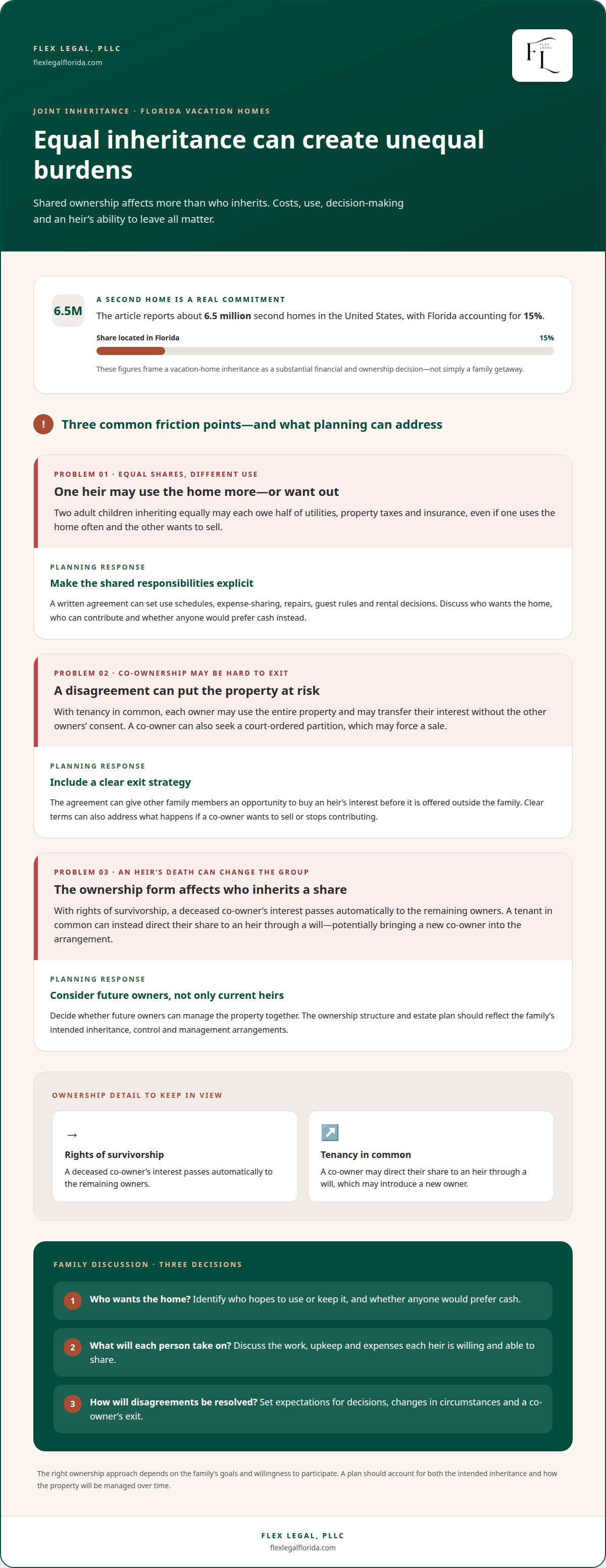
Equal inheritance can create unequal burdens. If two adult children inherit a home equally, each may owe half of the utilities, property taxes, and insurance, even if one uses it often and the other wants to sell. In a tenancy in common, each co-owner can use the entire property and may transfer their interest without the others’ consent. A co-owner can also seek a court-ordered partition, which may force a sale.
The ownership form affects what happens when an heir dies. With rights of survivorship, a deceased co-owner’s interest passes automatically to the remaining owners. A tenant in common can instead direct their share to an heir through a will. That transfer may bring a new co-owner into the family arrangement, so an estate plan should consider whether future owners can manage the property together.
Assess willingness and finances before deciding whether children should retain the home. The United States has about 6.5 million second homes, and Florida accounts for 15 percent. The typical second home represents a significant financial commitment rather than a simple family vacation spot. Those figures illustrate why an inheritance can represent a substantial investment, not simply a family vacation. If an heir doesn’t want the property, the plan can provide for a different distribution of assets.
Borrowing against a vacation home may be an option when an owner wants to give cash while retaining the property. The loan creates a repayment obligation tied to an asset intended for the next generation. Compare this approach with an outright transfer or gifts of other assets, considering the family’s circumstances and the home’s future role.
Renting introduces another consideration: liability. An LLC may limit members’ personal exposure for claims under the law of most states, but insurance may not cover a claim. Ownership structure, rental plans, and insurance therefore belong in the same transfer discussion.
Florida homestead protections
Florida homestead rules can affect whether parents may leave a home as planned. Florida Statutes § 732.4015 restricts devising protected homestead property in certain circumstances involving a surviving spouse or minor child. The property’s protected-homestead status, not the family’s label for it, is the key planning distinction. Estate planning for vacation homes in Florida should therefore begin by assessing the property’s status.
Trust ownership doesn’t remove homestead from the analysis. Florida Statutes § 736.1109 addresses homestead protections involving testamentary and revocable trusts. A sound approach to estate planning for vacation homes in Florida coordinates the property’s title, trust language, and intended beneficiaries. For example, a plan leaving a residence to children must account for whether a surviving spouse or minor child affects that transfer.
These rules matter across generations because a seemingly straightforward transfer can conflict with statutory limits. A parent may want to preserve a home for adult children, while the property’s protected status and family circumstances affect the available strategies. Before relying on a will or trust to direct ownership, determine how the property is titled and whether homestead protections apply.
Property taxes and Save Our Homes portability are separate from inheritance restrictions. For a vacation property, start by determining whether it qualifies for homestead treatment; inheritance rules alone do not establish its tax status or portability eligibility. Keep these questions distinct when considering whether heirs can afford the property and how a transfer may affect them.
A coordinated review can connect homestead status, title, and the intended transfer. That matters when a family wants to retain the property while preserving flexibility for heirs. Plan a homestead-focused estate review to align ownership with the family’s goals.
Flex Legal, PLLC
Flex Legal, PLLC helps Florida families align a vacation home’s ownership and inheritance plan with their broader estate planning goals. Turn to the firm when deciding whether a trust or will should direct the property, or when heirs’ needs make the plan more complex.
A Revocable Living Trust can support a plan for managing and transferring property, while a Last Will and Testament can state how assets should pass. Flex Legal, PLLC also provides Special Needs Planning and Guardianship for families whose circumstances call for those considerations. The right combination depends on your property, intended heirs, and the responsibilities you want to pass on.
For an estate plan tailored to your family and Florida property, contact Flex Legal, PLLC to discuss your needs.
Shape a plan that can adapt with your family
A vacation home’s role can change as family members move, finances shift, or heirs make different plans for the property. Estate planning for vacation homes in Florida should leave room to revisit ownership and responsibilities rather than treat today’s arrangement as permanent. A clear plan can help preserve the home’s place in family life while giving future generations a practical path forward.
Flex Legal, PLLC offers Special Needs Planning, Revocable Living Trusts, and Guardianship. These services can address broader family needs alongside decisions about a vacation property. Discuss your priorities, intended heirs, and the flexibility you want in your estate plan with the firm.
Contact Flex Legal, PLLC to talk through a plan that reflects your family’s goals and the future you envision for the home.
Frequently Asked Questions
How does Florida homestead law affect a vacation home and estate planning?
Florida homestead protections can limit how protected property is devised when a surviving spouse or minor child is involved. A vacation home’s family use alone doesn’t establish whether it qualifies as protected homestead. Its status and ownership should be considered alongside the intended inheritance. Florida Statutes § 732.4015 addresses restrictions on devising protected homestead, while § 736.1109 covers homestead protections involving testamentary and revocable trusts.
What are the Florida probate rules and costs for a vacation home?
Whether a Florida vacation home triggers probate depends partly on how it is owned. Property transferred into a trust can avoid probate, while a home held as part of an owner’s personal estate may require probate administration. There is no single cost for every estate; the administration required and the property’s ownership affect the process. A home in another state may also require probate there.
How can a Florida estate planning attorney help a non-Florida resident avoid ancillary probate for Florida real estate?
A Florida estate planning attorney can review how the property is titled and incorporate it into an estate plan intended to avoid a separate probate proceeding. A vacation home owned outside the owner’s state of domicile may require an additional probate proceeding where the property is located. For Florida real estate, the attorney can coordinate the ownership documents with the trust or other plan so the title aligns with the intended transfer.
How can co-owners work with an estate planning attorney to plan for succession, buyouts, and disputes over a Florida vacation home?
Co-owners can have an attorney document how ownership passes, how a buyout is offered, and how disagreements are handled. A written agreement may give family members the chance to purchase an owner’s interest before it leaves the family. It can also set procedures for dues, repairs, property expenses, and scheduling. These terms help clarify decisions if an owner wants to leave or heirs disagree.
How do short-term rental rules, insurance, and liability affect estate planning for Florida vacation homes?
Rental plans can affect how a family structures ownership and assigns property responsibilities. Florida zoning rules, including those affecting coastal properties, may shape how a vacation home can be used. An LLC may limit members’ personal exposure for claims under the law of most states, but insurance may not cover a particular claim. The estate plan should account for rental intentions, management duties, and how the property passes to heirs.
Comments