
Estate Planning for Unmarried Partners With Children: Key Needs

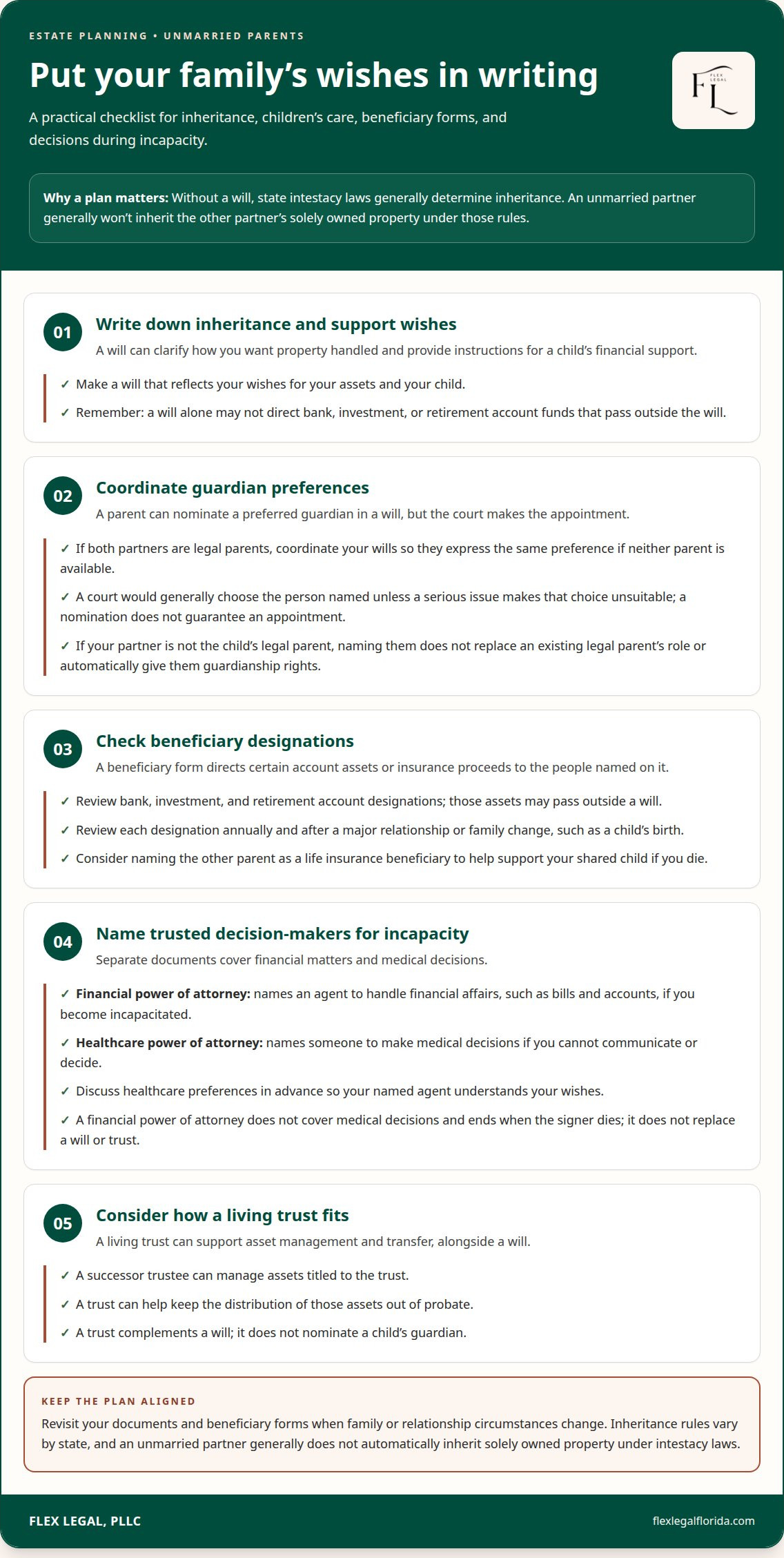
Having a child together doesn’t automatically protect an unmarried couple’s finances or clarify who will care for the child if a parent dies. Estate planning for unmarried partners with children helps put those intentions in writing through wills, guardian nominations, beneficiary designations, and related documents. Without a will, state intestacy laws generally determine who inherits, and an unmarried partner generally won’t inherit a deceased partner’s solely owned property under those rules.
It’s understandable to expect that raising a child together gives both parents clear rights and protections. A carefully structured estate plan can put each parent’s wishes in writing and create a clearer path for the family if either parent dies or becomes unable to make decisions.
This article explains why planning matters, how wills and guardian nominations work, what beneficiary designations can do, and which other protections unmarried parents may consider for their family.
Table of Contents
Estate Planning for Unmarried Couples: Do Unmarried Couples Need an Estate Plan?
Yes. An estate plan can specify how unmarried parents want assets managed, children supported, and decisions handled during incapacity.
Without a plan, state intestacy laws generally determine inheritance, and a partner may lack authority to act for the other.
Financial Powers of Attorney
A financial power of attorney authorizes someone to manage another person’s financial affairs if they become incapacitated. Unmarried partners can name a trusted person as agent to handle matters such as bills and financial accounts.
Without this document, a partner may need to go to court to establish authority over the other person’s assets. The authority ends when the person who signed the power of attorney dies, so it doesn’t replace a will or trust.
Children’s Guardianship and Financial Support
A will lets a parent state a guardian preference and give instructions for a child’s financial support. A court appoints the guardian and would generally choose the person named in the will unless a serious issue makes that choice unsuitable.
If an unmarried parent dies without a will, state intestacy laws determine who inherits the parent’s property. An unmarried partner generally won’t inherit the deceased partner’s solely owned property under those laws; children and close relatives may inherit instead. If the surviving partner isn’t the child’s legal parent, they may not automatically have guardianship rights. A will can clarify the parent’s preference, but it doesn’t guarantee the partner’s appointment.
Healthcare Powers of Attorney
A healthcare power of attorney names someone to make medical decisions if the person signing it can’t communicate or decide. Unmarried partners can name each other, giving a partner a defined role during a medical crisis.
Without healthcare documents, a partner may lack legal authority to make decisions for an incapacitated loved one. Discussing healthcare preferences in advance can help the named agent understand the person’s wishes. A financial power of attorney covers finances, not medical decisions, so the documents serve different purposes.
Insurance, Inheritance, and Planning Costs
Life insurance can help support a shared child financially after a parent’s death. Naming the other parent as beneficiary directs the policy proceeds according to that designation, rather than relying only on a will.
Inheritance rules vary by state, and unmarried partners generally don’t automatically inherit solely owned property under intestacy laws. Tax outcomes depend on applicable rules, ownership, and the plan’s structure; married couples may be treated differently under the law.
The cost of wills, trusts, and estate planning depends on the case, including document scope, assets, and family arrangements, and is given after a quote request.
Wills and guardian nominations for minor children
For unmarried couples, a will can record each parent’s guardian preference and provide direction for a child’s care. This matters because a shared relationship alone doesn’t determine who will raise a child if both legal parents become unavailable.
A parent can nominate a guardian in a will, but a court makes the appointment. The court would generally appoint the nominated person unless a serious issue makes that choice unsuitable. If both partners are legal parents, they can name someone else to care for their children if neither parent is available. Coordinating their documents helps make those preferences clear.
The child’s legal-parent relationships matter. If only one partner is a child’s legal parent, that parent can nominate the other partner. However, another legal parent would likely take over raising the child. Naming a partner doesn’t replace the role of an existing legal parent. An attorney can help unmarried couples address these distinctions in their wills and guardianship planning.
How can an estate planning attorney help unmarried partners provide for each other and their children through a will or trust? An attorney can shape documents around the family’s legal relationships, guardian preferences, and plans for assets. A living trust can name a successor trustee to manage assets titled to the trust and help keep their distribution out of probate. It complements a will, rather than naming a child’s guardian.
Consider a practical example: one parent names a trusted relative as guardian if both legal parents are unavailable, while the other parent’s will reflects the same preference. That shared decision gives the court a consistent picture of the parents’ wishes. Professional guardian nomination planning can help tailor the documents to the family’s situation.
Beneficiary designations
Beneficiary forms direct certain accounts and insurance proceeds to the people named on them. For unmarried parents, these designations can help align financial transfers with plans for a partner and child.
Retirement Account Beneficiaries
A retirement account beneficiary designation names who receives the account’s assets after the owner dies. In the United States, bank, investment, and retirement accounts may pass outside a will, so a will alone may not direct those funds to an unmarried partner.
The account owner names beneficiaries using a form provided by the bank or account custodian. Review each designation annually and after a major relationship or family change, such as a child’s birth. This helps keep the named recipient aligned with current wishes.
Life Insurance Beneficiaries
A life insurance beneficiary designation identifies who receives policy proceeds after the insured person dies. Unmarried parents can name each other to help support their shared child financially if one parent dies.
For example, a parent might name their partner as primary beneficiary and consider how the child’s needs should be addressed in the broader plan. The policy form controls who receives the proceeds, so coordinate it with the will and any trust rather than assuming those documents change the designation.
Social Security benefits follow different rules from account and policy designations. According to the Social Security Administration, a married person’s spousal benefit can be up to half of their spouse’s benefit if that amount exceeds their own. A surviving spouse can start collecting a deceased spouse’s larger Social Security benefit as early as age 60, according to the Social Security Administration.
Unmarried partners shouldn’t assume they receive benefits reserved for a spouse. Life insurance naming a partner can help address the financial impact of a lost Social Security benefit, while a separate retirement account designation directs that account’s assets.
Coordinate forms for retirement accounts, insurance policies, and estate documents. If a parent’s wishes change after a new child, separation, or reconciliation, update the relevant designations and confirm each account reflects the intended recipient. A healthcare directive addresses medical decisions, not who inherits financial accounts.
Estate planning protections for unmarried couples
An estate plan can coordinate property, decision-making authority, and support for a shared child. State law and asset ownership affect which protections unmarried partners need.
State-Law Differences
Inheritance, property, and guardianship rules vary by state, so a plan should reflect where a family lives and owns property. Without a will, intestacy laws determine who inherits; an unmarried partner generally doesn’t inherit solely owned property under those rules. A child’s legal parents also affect who may care for them if a parent dies. For West Palm Beach families, local legal guidance can help align planning documents with Florida circumstances.
Protections for Unmarried Partners
A will can direct solely owned assets to a partner or child, while a revocable living trust can name a successor trustee to manage assets titled to it. Joint ownership with right of survivorship can transfer jointly titled property to the surviving owner, but it doesn’t address every asset or planning need. The deed’s wording matters because it records the ownership arrangement.
Other documents address different risks. A durable power of attorney authorizes someone to manage financial affairs during incapacity, while a healthcare directive addresses medical decisions. A cohabitation agreement can record financial responsibilities and how jointly owned property should be handled if the relationship ends. It doesn’t replace a will or trust, so coordinate the documents.
Also account for assets that may pass outside a will. Bank, investment, and retirement accounts can use beneficiary designations, while digital assets and funeral preferences may need separate directions. For example, a partner named on a joint account may have access to that account, but not authority over the other partner’s separate accounts. Review titles, beneficiary forms, and planning documents together.
Plan protections for your shared assets and family with documents tailored to your circumstances.
Flex Legal, PLLC
Flex Legal, PLLC helps unmarried parents put their wishes for their children and assets into coordinated estate planning documents. If you need to nominate a guardian, clarify how property should pass, or plan for a child with special needs, legal guidance can help align those decisions.
Depending on your family’s needs, planning may include a Last Will and Testament, a Revocable Living Trust, Guardianship, or Special Needs Planning. These tools address different concerns, from recording guardian preferences to structuring how assets are managed for a child. The right combination depends on your family relationships, property, and priorities.
As your circumstances change, such as after a child’s birth or a change in assets, revisit whether your documents still reflect your intentions. For help shaping a plan around your family, contact Flex Legal, PLLC.
Give Your Family’s Plan Room to Grow
Your family’s needs may shift as children grow, relationships change, or your financial picture evolves. A plan that reflects your current priorities gives you a clearer starting point, but it should be revisited when those priorities change. For estate planning for unmarried partners with children, the next step is turning personal intentions into coordinated decisions that fit your family’s circumstances.
Flex Legal, PLLC can help shape your plan through Special Needs Planning, Revocable Living Trusts, and Guardianship. The focus goes beyond preparing documents: it’s about helping your choices work together as your family moves through different stages, so each decision supports the future you want to build.
Take the next step at a pace that feels right for your family. Contact Flex Legal, PLLC to discuss your estate planning needs and begin creating a plan that can adapt with you.
Frequently Asked Questions
What Types of Documents Should Be in Place for Unmarried Couples?
Unmarried couples commonly need documents addressing inheritance, incapacity, and children’s care. For example, each partner can prepare a will and financial power of attorney, while healthcare documents address medical choices. Review these documents alongside property titles and account beneficiary forms. If a home, investment account, or other asset is titled differently from the plan, its transfer may not follow the same instructions.
Home Sweet Home, But Whose Name Is on the Deed?
The deed identifies the property owners and can affect what happens to a home when one partner dies. In many states, co-owners must hold title as joint tenants with right of survivorship for the surviving owner to receive the property automatically. That arrangement doesn’t address every estate-planning concern and may have tax consequences. For a West Palm Beach home, review ownership and the estate plan together.
What estate planning documents should unmarried partners with children have?
Estate planning for unmarried partners with children can address guardian preferences, asset management, and decision-making during incapacity. A will can document a parent’s wishes, while a trust can provide a structure for managing assets for a child. Financial and healthcare powers of attorney address different needs if a parent can’t act. The documents should reflect the family’s legal relationships and property arrangements.
How can an estate planning attorney help unmarried partners name guardians for their children?
Estate planning for unmarried partners with children can require careful attention to each child’s legal-parent relationships. An attorney can help parents prepare coordinated documents that state their guardian preferences and account for the other legal parent’s role. For example, if one partner isn’t a legal parent, that partner’s nomination may not determine who raises the child. A court appoints the guardian and considers the circumstances.
How do beneficiary designations on life insurance and retirement accounts affect an estate plan?
Beneficiary designations can direct insurance or account assets to someone named on the provider’s form, rather than through a will. For example, a parent who wants a partner to receive life insurance proceeds should state that intention on the policy designation. Retirement accounts also have their own beneficiary forms. Review each form when family circumstances or estate-planning wishes change.
How can an estate planning attorney help unmarried partners plan for incapacity with powers of attorney and health care directives?
An estate planning attorney can help partners distinguish financial authority from medical decision-making authority and prepare documents for each role. A financial power of attorney can authorize an agent to manage financial affairs during incapacity. A healthcare directive can name someone to make medical decisions if the signer can’t communicate. Written health information permissions can also help address privacy barriers when a partner needs to discuss care.
Comments