
Estate planning for parents of minor children Florida: When children inherit

In Florida, a minor generally can’t receive an inheritance directly; property may be managed through a court-supervised guardianship, with remaining assets paid to the child at 18. Thoughtful estate planning for parents of minor children in Florida can help shape how that inheritance is managed and when your child receives it.
Choosing who would care for your child is only part of estate planning for parents of minor children in Florida. You may also want to decide who manages an inheritance, how life insurance proceeds are handled, and who can make healthcare decisions if you’re unable to speak for yourself.
This guide explains when children inherit in Florida, how to name a guardian, and why beneficiary choices matter. It also covers how a trust can give you more control over a child’s inheritance, and how a Designation of Health Care Surrogate and Living Will can support your broader plan. The goal is a clear, coordinated approach that reflects your family’s needs, not just a collection of documents.
Table of Contents
How do I choose a guardian for my child?
Choose someone whose character, stability, and relationship with your child suit the caregiving role. A Florida will can record your choice and help guide the court.
Florida Statutes Section 744.3046 allows a parent to designate a guardian for minor children by will. Name a primary guardian and an alternate in case your first choice cannot or will not serve. A Florida guardian does not have to live in Florida, so a trusted relative in another state may be considered. A short-term guardian can also help if you or your chosen guardian is temporarily unavailable. Consider the person’s ability to care for your child and provide financial stability.
For a Florida will to be valid, the person making it must sign it, and two witnesses must sign it. Include your guardian nomination in the properly executed will so your preference is documented. Review your estate plan regularly, especially after a child is born or adopted, a move, a new job, or another major life change.
Separating Caregiving and Financial Roles
A guardian cares for your child, while a trustee manages assets held for the child. These roles don’t have to go to the same person. For example, a relative might provide a stable home while a financially capable friend manages trust funds, including life insurance proceeds directed into the trust. Naming separate people lets you match each responsibility to the person best suited to handle it.
Court Appointment Without a Will
Guardianship proceedings are the court process for appointing someone to care for a child when parents die without naming a guardian in a will. The court decides who will serve instead of following a recorded parental nomination. If both parents die or become incapacitated, the process may take months. A will gives the court a considered choice and an alternate to review, though the court is not bound by the nomination.
At what age does a child inherit in Florida?
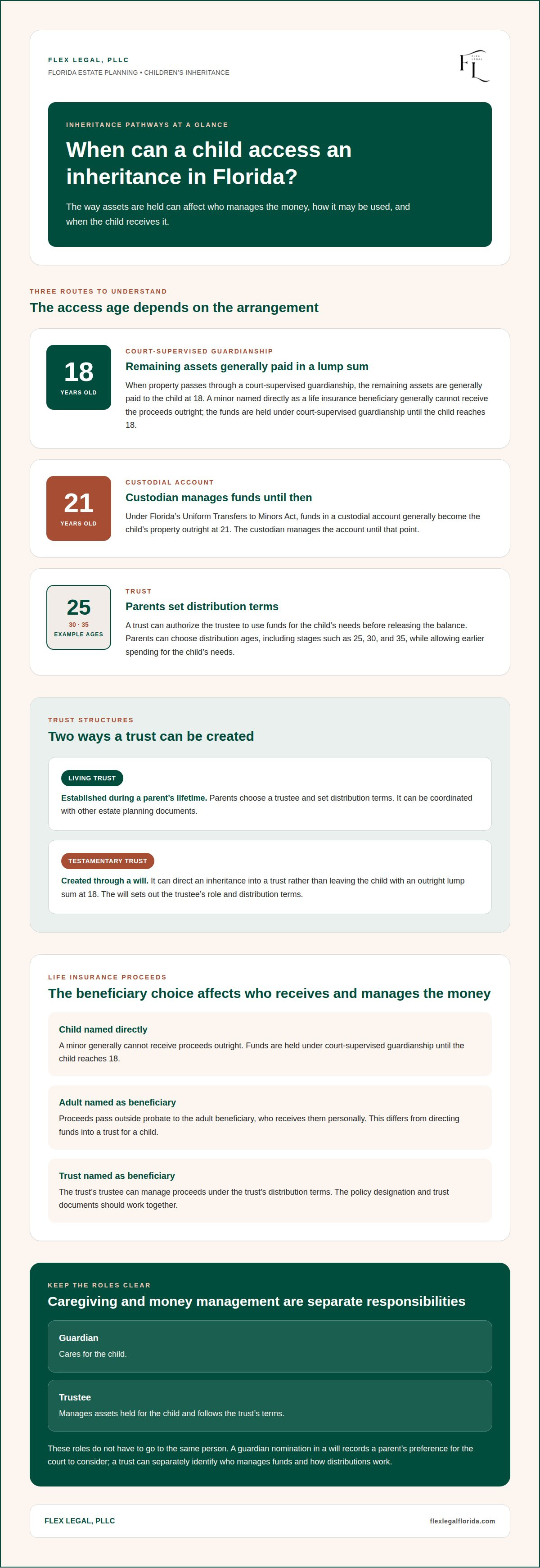
In Florida, the way assets are held affects when a child can access an inheritance. If property passes through a court-supervised guardianship, the remaining assets are generally paid to the child in a lump sum at 18.
Trusts for a Child’s Inheritance
A trust holds a child’s inheritance while a trustee manages the assets for the child’s benefit. Trust terms can authorize distributions for the child’s needs before the remaining funds are released. This separates financial management from immediate ownership and gives parents control over timing.
For example, a trust can authorize a trustee to use funds for a child’s needs, then distribute the balance at selected ages. Parents decide what authority the trustee has and how distributions should work. Specific terms matter: a trust can provide support while the child is young and delay access to remaining assets until the child is older.
A revocable living trust is established during a parent’s lifetime and can be coordinated with other estate planning documents. Parents choose a trustee and set the distribution terms. A Florida trust can stage distributions at ages 25, 30, and 35, while allowing the trustee to spend funds earlier for the child’s needs. An estate planning attorney can help align those terms with the family’s assets and goals.
Testamentary Trusts for Children
A testamentary trust is created through a will and manages assets distributed under that will. It can direct a child’s inheritance into a trust instead of leaving the child with an outright lump sum at 18. The will sets out the trustee’s role and the terms for distributions, so the documents should work together.
Parents can decide when a trust should distribute remaining assets, or whether it should continue longer. A living trust is established during life; a testamentary trust is created by will. When planning for a child, consider how each option handles assets, trustee authority, and distributions.
Does life insurance pass directly to my children without a trust?
In Florida, a minor child named directly as a life insurance beneficiary generally can’t receive the proceeds outright. Instead, the funds are held under court-supervised guardianship until the child reaches 18. That outcome affects who manages the money and when your child can use it.
Florida parents can coordinate life insurance and other assets with their estate plan by reviewing beneficiary designations. Consider who should manage funds for a minor, whether a trust should receive the proceeds, and whether that arrangement reflects your wishes. Naming a child directly doesn’t automatically appoint the adult you want to manage the money.
Beneficiary designations determine who receives policy proceeds. When a policy names an adult beneficiary, the proceeds pass outside probate. The adult may be a willing relative or another trusted person, but consider your relationship and how you intend the money to be used. An adult beneficiary receives the proceeds personally, which differs from directing funds into a trust for a child.
A named custodian offers another route. Under Florida’s Uniform Transfers to Minors Act, funds in a custodial account generally become the child’s property outright at 21. The custodian manages the account until then. This differs from a trust, where the trustee follows the trust’s terms for distributions. Consider whether a fixed access age or more flexible instructions better fit your child’s needs.
Coordinating an insurance policy with a living trust can align the proceeds with your plan for other assets. For example, parents may name the trust as beneficiary so its trustee manages the proceeds under the trust’s distribution terms. The policy designation and trust documents should work together; otherwise, the proceeds may follow a different path than you intended.
Coverage is another planning decision. One market recommendation for new parents is life insurance equal to 10 to 15 times annual income. Treat coverage and beneficiary choices as connected decisions: the amount addresses financial support, while the designation shapes who manages the proceeds for your minor child.
Healthcare surrogate designation and living will
A guardian nomination addresses who may care for your child, while healthcare documents address decisions about your own care. A Designation of Health Care Surrogate identifies someone to make healthcare decisions if you can’t communicate. A Living Will records your wishes about medical care. Together, these documents add a personal-care layer to estate planning for parents of minor children in Florida.
Choose a surrogate who understands your values and can communicate them clearly. That person might be a spouse, sibling, or trusted friend. Consider how they would handle a serious diagnosis, treatment choices, or conversations with medical professionals. A family member may be close to you, but the best choice is someone willing to speak for you under pressure and follow your stated preferences.
A Living Will serves a different purpose: it describes your wishes in certain medical circumstances. For example, you can use it to express preferences about treatment if you become unable to communicate. Specific directions can help your surrogate understand what matters to you instead of relying on guesswork. Review the document as your health, beliefs, or family situation changes.
These documents also matter to parents because an unexpected medical event can affect who handles day-to-day decisions for a child. A healthcare surrogate does not replace a child’s guardian nomination. The documents address separate needs: one identifies someone to make healthcare decisions for you, while the other records your preference for your child’s care. Keeping those roles clear helps relatives understand whom you chose for each responsibility.
Discuss how the Designation of Health Care Surrogate and living will fit with your other estate planning documents. An attorney can help prepare documents that reflect your wishes and work together. Plan your healthcare documents as part of a coordinated approach to family planning.
Flex Legal, PLLC
Flex Legal, PLLC helps Florida parents coordinate their choices about guardianship, inheritance, and family protection in an estate plan. Turn to the firm when you need to name a guardian in a will, decide how a child’s inheritance should be managed, or align beneficiary designations with trust documents.
Depending on your family’s needs, planning may include a Last Will and Testament, a revocable living trust, Guardianship Proceedings, or Special Needs Planning. These options can address different concerns, from documenting a guardian choice to planning for a child who may need ongoing support. The right combination depends on your priorities and the decisions you want your documents to carry out.
Contact Flex Legal, PLLC to discuss an estate plan tailored to your family.
Make Your Family Plan a Living One
Your family’s needs will change as children grow, relationships shift, and financial responsibilities evolve. Treat estate planning for parents of minor children in Florida as an ongoing process, not a one-time task. Regular review can help keep your decisions aligned with the people and priorities that matter to you now.
The next step is turning your intentions into coordinated documents. Consider which choices still reflect your wishes, who should carry them out, and whether your current plan accounts for your family’s circumstances. Flex Legal, PLLC can help you develop an approach that fits your goals and adapt it as life changes.
Start a conversation about your family’s estate plan. A clear plan can give your loved ones useful direction when they need it most.
Frequently Asked Questions
Can I name different people as guardian and trustee?
Yes. You can choose one person to care for your child and another to manage inherited assets. These roles call for different strengths: a relative may provide a familiar home, while a financially organized person may handle trust records and distributions. Consider how the two people would communicate about your child’s needs, and name alternates so your plan remains workable if someone cannot serve.
Can a minor directly receive an inheritance?
Generally, a minor can’t receive an inheritance directly in Florida. If assets pass to a child without a trust or other management arrangement, a court-supervised guardianship may manage them, with the remaining assets paid to the child at 18. For example, a parent leaving a bank account directly to a minor should consider how the funds will be managed before the child can control them.
Do you need to speak with a Florida estate planning lawyer?
Speaking with a Florida estate planning lawyer can help you coordinate documents around your family’s circumstances. This can be especially useful if you own property, have children from different relationships, or want to provide for a child with special needs. A lawyer can explain how your choices fit together under Florida law. West Palm Beach parents can discuss their family’s goals and planning needs with Flex Legal, PLLC.
Do new parents need a will or trust?
New parents should consider a will because it can name a guardian and direct how property passes. A will can also establish a testamentary trust for a child’s inheritance. A revocable living trust is another option for managing assets under terms you set. The right choice depends on your assets, the control you want over distributions, and how you want your documents to work together.
How much does estate planning cost for new parents?
Costs depend on the planning and documents involved. Flex Legal offers Flat-rate, up-front pricing… you pay what we quote you regardless of any extra work performed. No surprises, no gimmicks. The scope may differ depending on whether your plan involves a will, trust, or additional planning for your family. Contact Flex Legal, PLLC to discuss your needs and receive a quote.
What estate planning documents should Florida parents of minor children have?
Parents commonly consider a Last Will and Testament, a Guardianship Designation for Minors, and a trust when setting terms for a child’s inheritance. A Durable Power of Attorney (Financial) addresses financial decisions if a parent can’t act, while a Designation of Health Care Surrogate and Living Will document healthcare decision-making and wishes. The right combination depends on your family, assets, and priorities.


Comments