
Estate Planning for Florida Property Investors: Which Tools Help Protect Property and Privacy

A will can direct who inherits your Florida property, but real estate transferred through a will is generally subject to probate. Estate planning for real estate investors in Florida may combine a revocable living trust, a will, powers of attorney, healthcare directives, and beneficiary designations. If rentals are held through an LLC, its ownership and management documents matter, too.
A sound plan should address more than who receives each property. How an asset is titled can affect how it transfers, whether probate is involved, and how much information about the estate becomes public.
This article explains how trusts, wills, Florida land trusts, and LLC succession planning can work together, along with the roles of incapacity documents and beneficiary designations. It also covers why a trust must be properly funded to serve its purpose and when to review your plan as property holdings or family circumstances change.
Table of Contents
What Estate Planning Tools Are Most Beneficial for Real Estate Investors?
A coordinated approach to estate planning for real estate investors in Florida connects property ownership, transfer instructions, and decision-makers. The right documents depend on how each asset is titled and who should manage it.
Core Estate Planning Documents
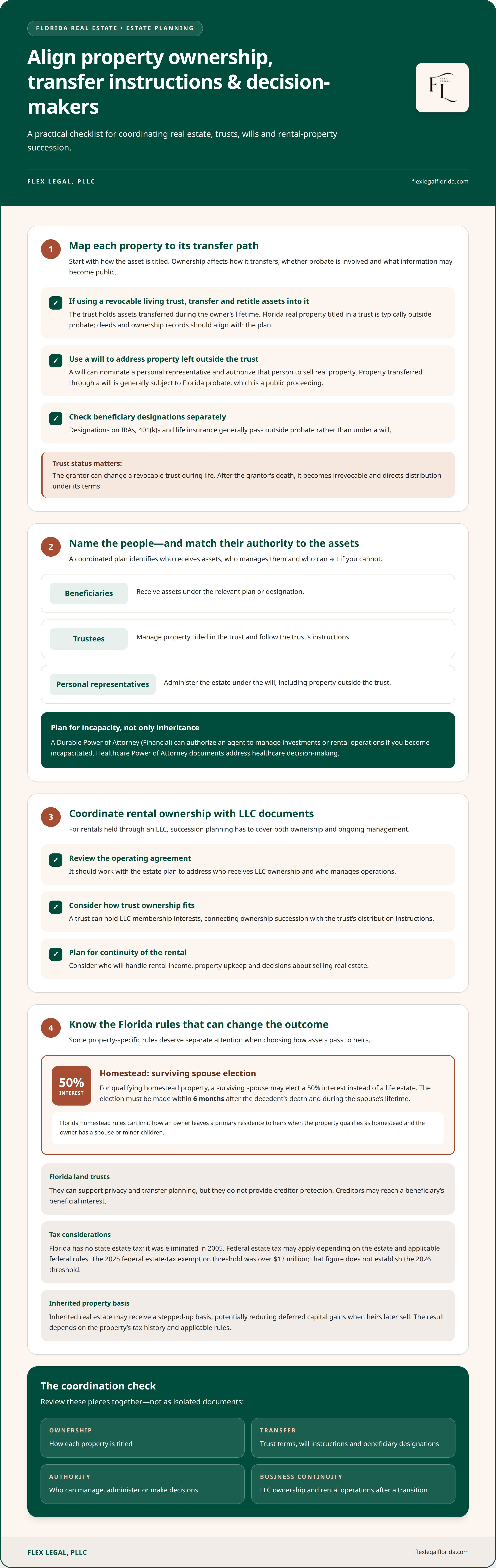
These documents address asset distribution and decision-making across financial, medical, and estate matters. An attorney can help you prepare a will, Durable Power of Attorney (Financial), Healthcare Power of Attorney, trust documents, and beneficiary designations. A will can nominate a personal representative and authorize that person to sell real property. A power of attorney can authorize an agent to manage investments or rental operations if you become incapacitated.
Beneficiary designations on IRAs, 401(k)s, and life insurance generally pass outside probate, rather than under a will. The 2025 federal estate-tax exemption threshold was over $13 million; that figure does not establish the 2026 threshold. Gift-tax treatment depends on applicable federal rules and a transfer’s timing and structure.
Choosing Estate Plan Decision-Makers
The people named in your plan carry out its instructions or act when you cannot. Beneficiaries receive assets, trustees manage trust property, and personal representatives administer estates under wills. Their responsibilities may involve rental income, property upkeep, or decisions about selling real estate.
An attorney can help match each person’s responsibilities to the relevant documents and assets. For example, a trustee may manage property titled in a trust, while a personal representative handles property outside it. Coordinating these roles clarifies who is expected to act and under what authority.
Revocable Trusts and Probate Avoidance
A revocable living trust holds assets transferred and retitled into the trust during the owner’s lifetime. Florida real property can be titled in a trust, and trust assets are typically not subject to probate. Trust-based succession is comparatively private, while probate proceedings are public records.
Estate planning for real estate investors in Florida should also account for assets that remain outside a trust. A will can address those assets. The grantor can change a revocable trust during life; after the grantor’s death, it becomes irrevocable and directs distribution under its terms. Deeds and ownership records should align with the plan.
Probate avoidance and privacy
Florida probate can involve court-supervised administration, public records, and delays before property transfers. Trust ownership and the way an asset is titled can affect how heirs receive it.
Homestead Rules for Heirs
Florida homestead rules can limit how an owner leaves a primary residence to heirs. These rules matter when a property qualifies as homestead and the owner has a spouse or minor children. A surviving spouse may elect a 50% interest instead of a life estate. According to the Florida Legislature, the spouse must make that election within 6 months after the decedent’s death and during the spouse’s lifetime.
Transferring Property to Heirs
Property transfer planning connects ownership, the estate plan, and business documents. For rentals held in an LLC, the operating agreement and estate plan should address who receives ownership and who manages operations. A trust can hold LLC membership interests, aligning ownership succession with the trust’s instructions. An attorney can review these documents together and help shape a transfer plan around the property and intended heirs.
Property transferred through a will is generally subject to probate in Florida, and probate proceedings are public records. Assets held in a revocable trust are typically outside probate, and trust-based succession is comparatively private. Florida land trusts can also support privacy and transfer planning, but they do not provide creditor protection. Creditors may reach a beneficiary’s beneficial interest.
Florida has no state estate tax; it was eliminated in 2005. Federal estate tax may apply depending on the estate and applicable federal rules. Florida’s homestead protections can affect creditors, while transfer rules for a surviving spouse or children require separate consideration.
Inherited real estate may receive a stepped-up basis, which can reduce deferred capital gains when heirs later sell. The result depends on the property’s tax history and the applicable rules.
For investors, property succession planning can coordinate trust transfers, LLC documents, and heir designations. This helps address probate, privacy, and management continuity without treating a land trust as creditor protection.
In Florida, What Critical Estate Planning Tools Should I Consider?
Begin with your goals, then coordinate ownership records, estate documents, and business agreements. A rental held personally may need different transfer planning from a property owned through an LLC.
Estate Planning Goals and Asset Distribution
Estate planning goals establish who should receive assets and who should manage them. For an investor, goals might include keeping a rental operating, directing income to heirs, or arranging a future sale. The distribution plan should account for each property, its ownership structure, and the people expected to handle it.
During a consultation, an attorney can map those goals to the relevant documents. For example, a trust may set terms for distributing an inheritance, while an LLC agreement addresses management authority. If a surviving spouse may inherit homestead property, the election rules also matter. According to the Florida Legislature, a surviving spouse must make the homestead election within 6 months after the decedent’s death and during the spouse’s lifetime.
Real Estate Ownership and Titling
Real estate titling identifies the legal owner and affects how a property connects to an estate plan. If you live outside Florida, an attorney can review deeds, trust ownership, and LLC membership records together. This helps establish whether the intended recipient receives the property itself or an ownership interest in an entity.
For an LLC-owned rental, the operating agreement should address who may manage the business if a member becomes incapacitated or dies. Aligning membership interests with a trust can support a planned ownership transition. The documents should reflect the investor’s intended distribution and management arrangement.
Asset Protection and Creditor Risks
Asset protection planning considers how ownership structures relate to potential creditor claims. A Florida land trust can support privacy and transfer planning, but it does not protect a beneficiary’s beneficial interest from creditors. That distinction matters when choosing a structure for a specific property.
An attorney can assess the property’s ownership, the investor’s goals, and the relevant entity documents together. For example, separate LLCs for individual properties or property groups may form part of a broader plan. This structure should not replace coordinated estate and business planning.
LLC and Trust Transfer Consequences
Transferring property into an LLC or trust can affect existing loan terms and property-tax treatment, depending on the transfer and the property’s circumstances. Review the mortgage documents, ownership records, and current tax status when planning a transfer.
For an out-of-state owner, an attorney can coordinate those records with Florida estate documents and the LLC operating agreement. Key considerations include who holds title, who controls the entity, and how the transfer fits the investor’s distribution goals. A planned review can surface these issues before ownership changes.
How Often Should a Florida Estate Planning Attorney Review My Estate Plan?
Review a Florida estate plan every 3 to 5 years, or after a major life change. A new property, changed family circumstances, or updated accounts can affect whether the plan still reflects your intentions.
Reviewing an Estate Plan
An estate plan review checks whether documents, property ownership, and beneficiary designations still work together. For a real estate investor, the review can compare the current property list with the assets addressed in the plan.
A Florida attorney can assess whether deeds and trust records reflect the intended ownership and whether accounts name the intended beneficiaries. Review the decision-makers named in your documents, too. If a rental moves into an LLC, the estate plan and operating agreement should still address who manages it if you die or become incapacitated.
Updating Plans After Life Changes
Major life changes can make existing instructions outdated, even if the documents remain valid. Marriage, divorce, a birth, a death, or a significant change in financial circumstances can affect who should inherit or make decisions.
Adding an investment property is another reason to revisit your plan. For example, a new LLC may change how ownership passes and who controls rental operations. A review can determine whether beneficiary designations, trust terms, and business documents remain aligned with your intended distribution.
Ongoing Estate Plan Maintenance
Ongoing maintenance keeps estate documents connected to changing assets and relationships. The general review interval is every 3 to 5 years, with an additional review after a major life event or significant financial change.
At each review, an attorney can consider property acquisitions or sales, changes to LLC membership, and beneficiary updates across accounts. They can also assess whether the plan addresses incapacity and rental management. Regular reviews help keep instructions consistent as your portfolio and family circumstances evolve.
Discuss an estate plan review when a new property, family change, or financial shift may affect your existing instructions.
Flex Legal, PLLC
Flex Legal, PLLC helps Florida property investors connect estate documents with their property and family goals. When ownership, intended beneficiaries, or management plans change, an estate plan review can identify where updates may be needed.
Planning may involve a Last Will and Testament, a Revocable Living Trust, or Guardianship Proceedings, depending on your circumstances. Trust planning can address how property is held and distributed, while a will can set out instructions for assets outside the trust. The right combination depends on your holdings, family needs, and succession priorities.
For guidance on aligning your property plans with your estate documents, contact Flex Legal, PLLC.
Shape a Plan That Can Grow With Your Portfolio
Your property portfolio may change as you acquire, sell, or reorganize investments. Your estate plan should keep pace so ownership arrangements and future decisions remain connected to your goals. A new partnership, a change in family circumstances, or a shift in how you hold property can be a good time to revisit the plan.
Estate planning for real estate investors in Florida is not a one-time document exercise. It is a framework for keeping property, decision-making, and family priorities aligned as circumstances evolve. Flex Legal, PLLC can help you consider how estate planning tools fit your situation, including Revocable Living Trusts, Special Needs Planning, and Guardianship Proceedings where relevant.
Start a conversation about the next step for your plan: contact Flex Legal, PLLC to discuss your options. A clear, coordinated plan can help you move forward with greater confidence as your investments and priorities change.
Frequently Asked Questions
Are There Also Ways to Mitigate the Risks of Including Real Estate in My Estate Plan?
Yes. Risk planning can address ownership, operations, and exposure to damage or claims. For example, an investor can review insurance for hurricane, flood, and liability risks while aligning LLC governing documents with succession instructions. A property-by-property inventory can also reveal mismatches, such as a rental held personally even though the plan expects an entity to manage it.
What Is a Florida Real Estate Trust and Can It Help Me?
A Florida land trust is a structure in which a trustee holds legal title to real estate while beneficiaries retain economic rights and management authority. Investors may use one to support privacy and simplify succession planning. It does not provide creditor protection: a creditor may reach the beneficiary’s beneficial interest. That distinction matters when weighing privacy against other ownership and risk-management goals.
What’s the Difference Between a Will and a Revocable Trust in Florida?
A will directs the distribution of probate assets and can nominate a personal representative. It can also address property not placed in a trust. A revocable trust directs assets transferred into it and can be changed during the grantor’s lifetime. For example, an investor may use a trust for titled assets and a will to cover an asset missed during funding.
When Is the Right Time to Start?
Start before a property purchase, ownership transfer, or major family or financial change. Planning early gives estate documents and any LLC agreement the opportunity to address who inherits an interest and who can manage rentals if you become incapacitated. It also helps account for existing properties rather than leaving newly acquired assets outside the intended arrangements.
Can an Estate Planning Attorney Help Decide Whether Florida Investment Properties Should Be Held in an LLC, Trust, or Both?
Yes. An attorney can assess how each property is titled, whether an LLC operating agreement addresses authority after a member’s death or incapacity, and whether trust ownership aligns with intended succession. For example, an LLC may hold a rental while a revocable trust holds the membership interest. Reviewing the deed, governing agreement, and estate documents together helps clarify ownership and management roles.
How Can a Revocable Living Trust Help Avoid Probate for Florida Real Estate?
A revocable living trust can help keep Florida real estate out of probate when ownership is transferred and retitled into the trust during the owner’s lifetime. For example, a deed may place an investment property in the trust so it can be distributed under the trust’s terms. Property left outside the trust may still need to be addressed through the will and probate.

Comments