
Creating a Pet Trust in Florida: How It Provides for Your Pet

Florida law allows pet owners to create a trust for an animal’s care under Fla. Stat. § 736.0408. When creating a pet trust in Florida, you can arrange for care if you die or become incapacitated, set aside assets for your pet, and name people to manage the funds and provide care.
Your concern is practical: a pet needs a trusted caregiver and resources, not just a promise that someone will step in. A pet trust can put those arrangements in writing, including instructions for your animal’s routine and medical needs. It can also direct who receives any funds left after your pet dies.
This guide explains what a Florida pet trust does, how state law supports it, and how funding and caregiver choices shape the plan. You’ll also learn how to direct remaining funds and fit a pet trust into a broader estate plan, so you can consider which arrangements suit your household.
Table of Contents
What Is a Florida Pet Trust?
A Florida pet trust is a legal arrangement that sets aside property and instructions for an animal’s care. It can take effect if the owner dies or becomes incapacitated and can cover dogs, cats, birds, and exotic animals.
Planning for an Animal’s Care
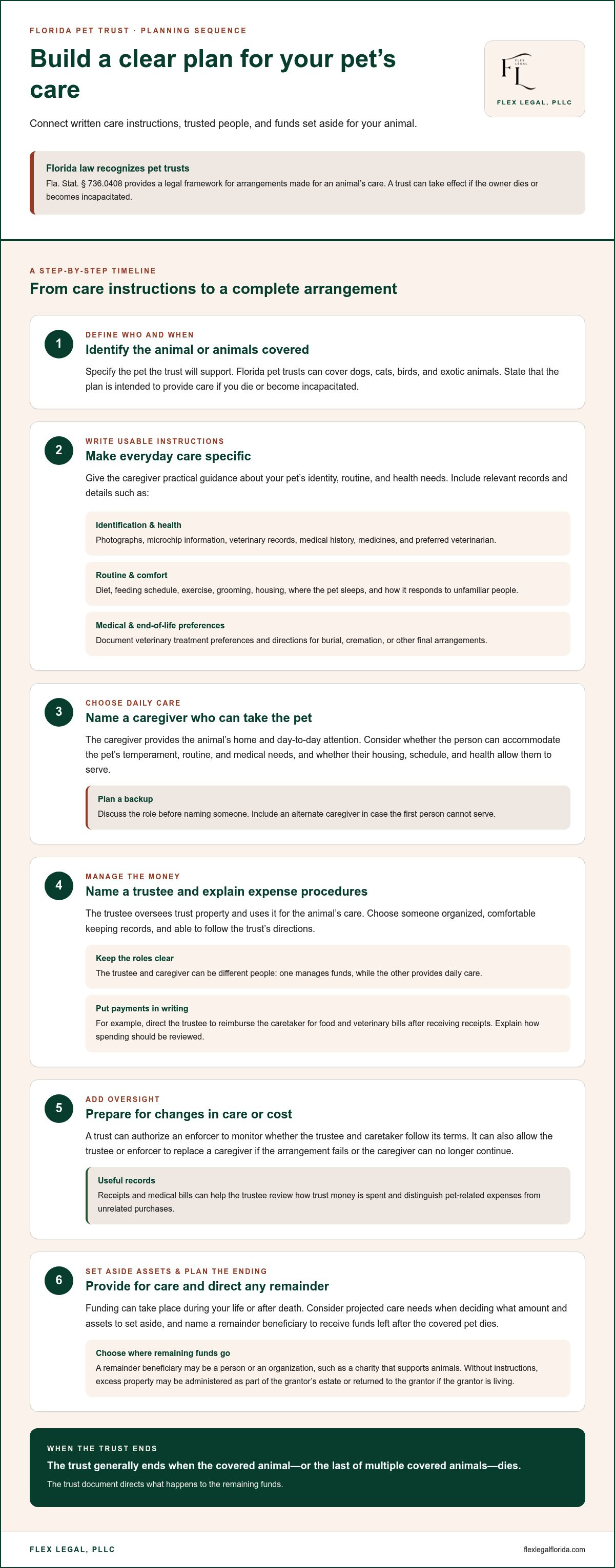
A pet trust directs how a chosen caregiver should care for an animal throughout its life. For pet owners creating a pet trust in Florida, that means planning who will take the animal, how trust funds will support its needs, and who will oversee the money. The trustee and caregiver can be different people, with one managing funds and the other providing daily care.
Documenting Care and Medical Needs
Care instructions give a successor caregiver usable guidance about the pet’s identity, routine, and health needs. Include identifying details such as photographs, microchip information, and veterinary records. Then describe the animal’s diet, feeding schedule, medicines, medical history, preferred veterinarian, exercise, grooming, and housing. Specific details, such as medication schedules and food preferences, help prevent guesswork when the pet changes homes.
Providing for Care and Disposition
Trust instructions can explain how the animal should be cared for and what should happen at the end of its life. Owners can document preferences for veterinary treatment, burial or cremation, and other end-of-life care. These directions give the caregiver and trustee a clear reference for medical decisions and final arrangements.
The trust can also describe the animal’s usual routine in practical terms. Note when it eats, where it sleeps, how it responds to unfamiliar people, and what helps it feel comfortable. A bird may need species-specific housing and handling instructions, while a dog’s plan may detail exercise and familiar walking routines. Clear directions help the caregiver keep the pet’s life consistent.
Florida’s pet trust statute, Fla. Stat. § 736.0408, provides a legal framework for arrangements made for an animal’s care. The trust should identify the animal or animals it covers and explain how the trustee may use the property for their benefit. Trust income can also raise tax considerations: according to the Internal Revenue Service, 37% applies to single taxpayers with taxable income of $626,351 and up.
Make instructions specific enough to guide care, but organize them for everyday use. A written record of veterinary preferences, medical documents, food, and routine gives the trustee and caregiver concrete guidance. The trust can also explain how to handle the pet’s care and final disposition, rather than leaving those choices to someone unfamiliar with your wishes.
What are the advantages of an animal trust?
An animal trust links caregiving instructions with money set aside for the pet’s needs. It also assigns clear roles, so the person providing daily care doesn’t have to manage every financial decision.
Choose a trustee who can manage funds
The trustee oversees trust property and uses it for the animal’s care. Choose someone organized, comfortable keeping records, and able to follow the trust’s directions. A friend who loves your dog may be an excellent caretaker but may not want financial duties. Naming different people for these roles can keep responsibilities clear.
Explain how the trustee should fund the trust and pay expenses. For example, the document can direct the trustee to reimburse the caretaker for food and veterinary bills after receiving receipts. It can also describe how the trustee reviews spending and whether the trustee should check on the animal. Clear procedures show how the money supports the pet.
Select a caregiver who knows the animal
The caretaker provides the animal’s home and daily attention. Consider whether a friend can accommodate the pet’s temperament, routine, and medical needs. A dog accustomed to long walks may need a caregiver who can maintain that routine. A bird may need someone familiar with its housing and handling needs.
Discuss the role before naming someone. A person’s housing, schedule, health, and willingness to care for the animal can change. Ask whether they understand the instructions and can take the pet when the trust becomes active. Naming an alternate caregiver gives the plan another option if the first person cannot serve.
Build in oversight and backup plans
A pet trust can authorize an enforcer to monitor whether the trustee and caretaker follow its terms. The trust may also allow the trustee or enforcer to replace a caregiver if the arrangement fails. This matters if the animal isn’t receiving proper care or the caretaker can no longer continue.
As part of estate planning, owners can align the trust’s care instructions, trustee responsibilities, and caregiver choice. A trustee can review receipts or medical bills to see how trust money is spent. These records help distinguish pet-related expenses from unrelated purchases. The document can also explain how the trustee should respond if costs, the animal’s needs, or the caretaker’s circumstances change.
Setting up these roles as part of a broader plan can make responsibilities easier to understand. Coordinating pet care with estate planning can help connect the trust’s instructions and financial oversight with your wider wishes.
Deciding where remaining funds go after the pet dies
When a Florida pet trust ends, its remaining funds go where the trust document directs. Without instructions, excess property may be administered as part of the grantor’s estate or returned to the grantor if the grantor is living.
Name a remainder beneficiary to make your wishes clear. This person or organization receives funds left after the covered pet dies and the trust ends. You might choose a relative, a friend, or a charity that supports animals. If the trust covers several animals, state that the remainder passes only after the last surviving animal dies.
Include end-of-life instructions in the trust alongside the distribution plan. You can describe preferences for veterinary care, burial, or cremation, then explain who should receive any unused funds. Keeping these directions together helps the trustee distinguish money reserved for the pet’s care from property intended for a beneficiary. It also gives the caregiver a clear reference for decisions at the pet’s end of life.
The trustee manages the funds and carries out the document’s directions. Choose someone able to keep clear records, pay approved expenses, and distribute the remainder as instructed. The caregiver may be a different person because daily care and financial management involve separate responsibilities. If the owner becomes incapacitated, the trust’s terms can guide the trustee without leaving the caregiver to decide how trust property should be handled.
Clear limits can help prevent misuse while the pet is alive. Describe qualifying expenses, such as food, grooming, veterinary treatment, and prescribed medication. The trustee can compare receipts or medical bills with those instructions before paying or reimbursing the caregiver. This creates a practical record of how trust property supports the animal, rather than relying on informal promises or undocumented spending.
Florida’s pet trust statute limits the use of trust property to its intended purpose, subject to a court’s determination that the trust holds more than that purpose requires. Naming a remainder beneficiary clarifies where any excess should go under the trust terms. An estate planning attorney can help align that direction with the rest of your estate plan, including what should happen if a named beneficiary cannot receive the funds. Review the document when your beneficiary, caregiver, or family circumstances change so the final distribution still reflects your wishes.
Funding a pet trust during life or at death
A Florida pet trust can receive funding during your lifetime or after your death. The timing affects when assets become available for your animal’s care, so match it to the circumstances the trust is meant to address.
Funding during life means transferring money or other assets into the trust while you can oversee the arrangements. You can use a separate account in the trust’s name, then review whether its balance matches your pet’s needs. This approach can make funds available if you become incapacitated, rather than leaving the caregiver to cover expenses without trust resources.
A trust funded at death receives assets through your estate plan. Coordinate the trust with your will or revocable trust so the document identifies what should pass into it. A pet-care clause in a will may leave the animal waiting while the will goes through probate. A properly coordinated plan can direct assets to the trust for the trustee to manage.
Estimate funding by considering regular expenses, expected medical care, and the animal’s likely needs over time. Gather records for food, grooming, medication, and veterinary visits, then consider how care might change as your pet ages. For example, an older pet may need more frequent treatment than a young, healthy animal. The estimate should reflect the pet’s needs and the trust’s intended duration.
Funding is essential: an unfunded trust has no money available for the animal’s care. Identify which assets will fund it, how they will reach the trust, and who will manage them. Appoint a trustee willing to keep records and follow the document’s limits. The caregiver can then focus on the pet while the trustee handles approved expenses.
Maintenance also deserves attention. The trustee may need to track deposits, payments, receipts, and changing care needs. Set out which costs qualify, such as food or veterinary treatment, and how the caregiver should document them. These directions create a practical process for handling routine bills and unexpected medical expenses without confusing pet costs with personal spending.
Review the funding arrangements when your pet’s health, caregiver, or available assets change. A trust designed for one animal may need different resources from a plan covering several pets. The amount set aside should serve the trust’s stated purpose. Under Florida’s pet trust statute, a court may determine whether trust property exceeds what that purpose requires. Revisiting the assets and instructions helps keep the plan aligned with your pet’s care.
Florida law authorizing pet trusts
Florida authorizes pet trusts under Fla. Stat. § 736.0408. The trust ends when the covered animal dies, or, for multiple animals, when the last surviving animal dies.
The statute gives pet owners a legal way to set aside property for an animal’s care. It also provides a way to enforce the trust: the document may name someone to monitor compliance, and a court may appoint an enforcer if none is named. That role gives someone authority to address whether the trustee and caregiver are following the written terms.
Trust property must serve its intended purpose. A court may determine that the trust holds more property than that purpose requires. This makes the stated care plan important: describe the animal’s needs and explain how trust funds support them. The amount should relate to the animal’s lifetime care, not an unrelated benefit for another person.
Florida law ties the trust’s duration to the animal’s life, not a general 21-year limit. A trust for one pet ends when that animal dies; a trust for several ends after the last covered animal dies. Florida also permits trusts to extend for up to 360 years, though a pet trust’s endpoint follows the covered animals’ lives. This distinction matters when planning for animals with long lifespans.
There is no single dollar figure that fits every pet trust. Instead, the statute focuses on whether property exceeds what the trust’s stated purpose requires. For example, a plan for a bird with specialized, long-term care needs may require different resources from a plan for a dog. The trustee should be able to connect payments to the animal’s care instructions and expenses.
The statute’s scope also matters: it cannot provide for animals acquired after the settlor’s death. Identify the pets covered by the document, and update the plan if your household changes while you’re able. An estate planning attorney can help align the trust’s purpose, beneficiaries, enforcement provisions, and distribution instructions. Any remaining property should be distributed as the document directs when the trust ends.
For help aligning a pet trust with your estate plan, discuss your Florida trust planning.
Flex Legal, PLLC: Special Needs Planning
Flex Legal, PLLC helps Florida families coordinate estate planning choices that support their wider wishes. If you’re considering a pet trust alongside a revocable living trust or Last Will and Testament, a coordinated plan can clarify how those documents work together. Special Needs Planning and Guardianship Proceedings address other family considerations that may affect your estate plan.
Consider professional guidance when you need to align your pet’s care arrangements with decisions about your assets, family, and future. Flex Legal, PLLC can help you understand planning options and prepare an approach shaped around your circumstances.
Contact Flex Legal, PLLC to discuss your estate planning needs.
Make your pet’s future part of your plan
Planning for an animal’s care can also prompt a broader review of the people and priorities your estate plan should protect. As you consider creating a pet trust in Florida, think about how your wishes for your pet fit alongside decisions for family members who may need support, asset management, or a guardian.
Flex Legal, PLLC offers Special Needs Planning, Revocable Living Trusts, and Guardianship Proceedings. These services can address related estate planning needs as you shape an approach that reflects your household and long-term priorities. A thoughtful plan lets you make these decisions intentionally, rather than leaving important details for others to work out later.
For guidance on your broader estate planning needs, contact Flex Legal, PLLC. A clear next step can help you move from considering your options to putting your wishes into a plan.
Frequently Asked Questions
How Do Pet Trusts Work?
A pet trust assigns people and property to support an animal’s care under written terms. The trustee manages the assets, while the caregiver looks after the pet. For example, the trust can direct the trustee to pay a veterinarian directly or reimburse the caregiver for approved treatment. The document can also state what happens if the first caregiver cannot take the animal.
Can my pet be my beneficiary?
A pet can be the animal a trust is created to benefit, but it isn’t a person who receives and manages property like a human beneficiary. Florida law recognizes trusts for animals and allows a person named in the trust to enforce its terms. The document can separately name a human or charity to receive any remaining property after the trust ends.
Is a Pet Trust a Trust Fund?
A pet trust is a legal trust, not simply an informal savings account labeled for pet expenses. The trustee manages property according to the document’s terms and applies it to the animal’s care. For instance, a separate account may hold trust assets, but the account alone doesn’t explain who can spend the money or what happens to unused funds.
What Can Be Included in a Pet Trust?
A pet trust can identify covered animals and set rules for care, spending, and administration. Practical details might include a pet’s registered name, microchip number, veterinary clinic, and a contact authorized to receive medical records. You can also identify a backup caregiver, explain how the trustee should document payments, and name who receives property left after the animal’s care ends.
Who Should Consider a Pet Trust?
A pet trust may suit owners whose animals need consistent care or whose informal plans depend on one person. It can be especially useful if a pet has a complicated medical routine, a strong attachment to a specific home, or needs that make finding a caregiver difficult. West Palm Beach pet owners can use written arrangements to clarify responsibilities for relatives who may live elsewhere.
Who Should Create a Pet Trust?
Any owner who wants a formal plan for a pet’s care can consider a trust, especially if no single relative has agreed to take full responsibility. Consider whether a trusted person can provide daily care and whether someone else can manage funds. Owners with multiple pets should also decide whether each animal needs its own caregiver or whether one person can care for all of them.
What are Florida's legal requirements for creating a pet trust?
Florida’s pet-trust framework is in Fla. Stat. § 736.0408, which applies to trusts created on or after January 1, 2003. The document should identify the animals and state the trust’s care purpose, how property may be used, and who will enforce its terms. Include practical administration details, such as who manages the assets and where remaining property goes.
How does Florida Statutes section 736.0408 apply to pet trusts?
Fla. Stat. § 736.0408 authorizes a trust for an animal’s care and sets its endpoint: the covered animal’s death, or the last surviving animal’s death if the trust covers several. A person named in the trust may enforce it; if none is named, a court may appoint an enforcer. The court may also determine whether trust property exceeds the stated purpose.



Comments